
When to Upgrade Your Exercise Bike (and When Not To)
Five decisions decide whether your current exercise bike actually needs replacing, what tier to step up to if it does, and when the upgrade is solving a problem the bike was never causing.
OnWhey is our own supplement brand.
Your current exercise bike is probably fine. The question is whether "fine" is what you actually need 18 months in, and whether the upgrade you are picturing solves the failure mode you actually have. Most people upgrade to the wrong tier, then resell the new bike for the same reason they resold the old one.
This is a decision walkthrough for the reader who already owns a stationary bike and is wondering whether to replace it. By the end of it you will know whether to keep the one you have, what tier to step up to if you do upgrade, and whether the bike you are eyeing actually fixes the part that broke. The Concept2 BikeErg appears later as one illustration of the top tier, not as a universal pick. Some readers should not be in this market at all.
The short answer
Upgrade only if you ride the current bike 12+ times a month and can name one specific failure mode (comfort, console, resistance, noise, wear). Match the tier to that one failure: mid-tier (S$500-1,000) for comfort or noise, top-tier (S$1,500-2,500, like the Concept2 BikeErg with PM5 console) for console accuracy or resistance ceiling. If you cannot pick one failure, the upgrade is the wrong fix.
Before any of this: are you actually using the bike?
Decision zero. If the current bike sits in the corner of the HDB living room and gets used twice a month, the upgrade will sit in the same corner for the same reason. Buying a better bike does not raise the floor on consistency, it raises the cost of inconsistency.
The honest threshold: 12 sessions a month for at least the last 90 days. Not "I plan to". Not "the new bike will motivate me". The 90 days of past behaviour is the only signal that survives the dopamine of unboxing.
If you have not hit 12 sessions a month consistently, the upgrade is not a bike. It is figuring out why you stopped using the first one. Most of the time the answer is the bike fits a use case you do not actually have, and the new bike will fit the same wrong use case.
Decision 1: what is the actual failure mode?
Riders rarely upgrade because the old bike broke. They upgrade because one specific thing about it became unbearable. Identifying which specific thing decides the tier and the resistance type. Lump all complaints together as "the bike sucks" and the upgrade misses.
Five failure modes show up across the Carousell resale listings and the gyms.sg reader inbox. Map your frustration to one of them before reading further.
| Failure mode | What it actually means | Upgrade direction |
|---|---|---|
| Comfort | Seat numbness past 25 minutes; handlebar position fixed | Adjustability, not motor. Step up one tier. |
| Console | Numbers feel made up; no real wattage; subscription locked | Top tier with real power-meter console. Two tiers up. |
| Resistance | Mushy on level 8/16; no progression for trained legs | Switch resistance type. Magnetic to air, or magnetic to higher-grade magnetic with a real flywheel. |
| Noise | Belt squeal or fan roar that the downstairs neighbour can hear | Magnetic only. Air bikes are loud by design, ignore the marketing. |
| Wear | Bearings squeaking by month 14; bolts loosening; pedal wobble | The current bike was an entry-tier build. Skip mid, go to a frame rated for commercial-grade hours. |
If you cannot pick one failure mode and have to circle three, you are upgrading because the bike is associated with a habit you have lost, not because it failed. Stop here. The honest fix is to ride the bike you have ten more times before opening a tab on Amazon.
In context
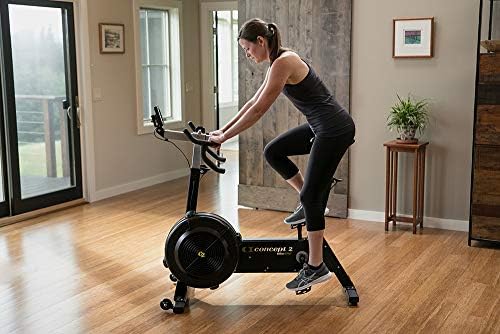
This is what the top tier looks like in a 60 cm by 122 cm footprint. The frame in the photo is the Concept2 BikeErg, used here to show what a serious air-resistance setup occupies in a real room. Most upgrade questions answer themselves once you tape this footprint on your floor.
Notice the rider position is upright, not racing posture. That is the cue: a stationary bike for indoor cardio, not a road-bike replacement.
Decision 2: which tier matches the failure mode?
Three tiers cover the market. Picking the wrong one is the most common upgrade mistake. The reader who needs comfort buys a top-tier air bike and discovers it is harsher than the magnetic mid-tier they replaced. The reader who needs real wattage buys a sub-S$500 model with a better console screen and discovers the console is still making numbers up.
Tier is set by frame quality, console quality, and resistance type, in that order. Price follows from those three. The price ranges below are Singapore retail in May 2026.
| Tier | Price (SG, 2026) | Fixes which failure mode | Frame life |
|---|---|---|---|
| Entry | Sub-S$500 | None of them. Same category as the bike you are replacing. | 12 to 18 months casual use |
| Mid | S$500 to S$1,000 | Comfort, noise. Real magnetic resistance, adjustable everything, no subscription. | 3 to 5 years moderate use |
| Top | S$1,500 to S$2,500 | Console, resistance, wear. Commercial-grade frame, real power meter, no subscription. | 8 to 12 years even with 5+ sessions a week |
The middle tier covers most upgrade scenarios. If the failure mode is comfort or noise, mid is the right answer and the top tier is overspending. The top tier earns its money only when the failure mode is console accuracy, resistance ceiling, or wear.
What the top tier looks like, as a concrete example
The Concept2 BikeErg is one of two products in Singapore that fully clear the top-tier definition above. (The other is the Wattbike Atom, which costs about 30 percent more and ships with subscription-friendly defaults that defeat half the reason to leave the cheaper bracket.) The BikeErg sits at S$2,050 on the Singapore listing as of this writing, with stock confirmed in May 2026.
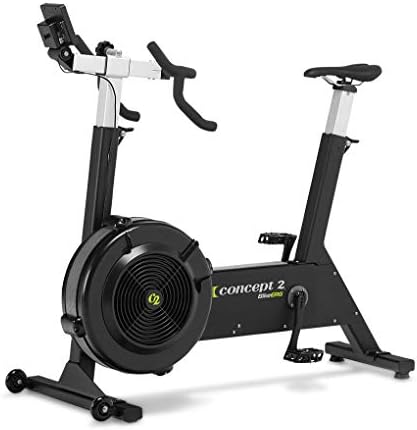
Concept2 BikeErg
S$2,050 live price, May 2026
Stock checked May 21, 2026. Re-verify before ordering.
Air resistance with damper-controlled flywheel. PM5 console reads real watts, calories, distance, and pace, the same monitor the rowers use. ANT+ and Bluetooth out. No app subscription. Frame rated for the kind of use that ruins consumer-grade bikes.
Check the price →The reason serious cyclists drift to this bike, not the Peloton-style alternative, is the console. The PM5 is the same monitor that ships on the Concept2 rower, which is the rowing machine every commercial gym in Singapore has bought for two decades. The numbers it reads are calibrated, not estimated. For a rider who has spent two years staring at made-up wattage on a consumer console, that change alone is the upgrade.
Decision 3: air or magnetic resistance?
The fork most upgrade buyers get wrong. The two systems feel different at the pedals, sound different in the room, and serve different training goals. They are not interchangeable.
Magnetic resistance uses a magnet positioned near a flywheel. Resistance is set by how close the magnet is. Smooth, silent enough to hold a phone call while pedaling, but the ceiling is low. The hardest setting on a S$700 magnetic bike will feel mushy to a trained cyclist, and the console output is calculated, not measured.
Air resistance uses a caged fan as the flywheel. Harder pedaling moves more air, which resists you more. The ceiling is effectively unlimited. The cost is volume: a serious effort sounds like a hairdryer one room away. The benefit is the wattage on the console is real, derived from how much air the fan actually moved.
| Pick this if | Magnetic | Air |
|---|---|---|
| Steady-state Zone 2 rides, 30 to 90 minutes | Yes | Works, but louder than needed |
| HIIT, sprint intervals, all-out efforts | Hits the ceiling at the hard setting | Yes, the bike scales with effort |
| Watts-based training off a real power meter | Numbers are estimated | Numbers are measured |
| Late-night riding when the neighbour is sleeping | Silent enough | Do not. Loud enough to wake a room. |
| Mixed household, one steady rider one HIIT rider | Compromises the HIIT rider | Compromises the steady rider |
If your training is mostly Zone 2 and the failure mode is comfort, you want a mid-tier magnetic upgrade and you should leave this article and read the stationary bike guide. If your training is mostly intervals and the failure mode is the console, an air-resistance top-tier bike is the right answer, and the Concept2 BikeErg or an air bike with an arm-pump element is the shortlist.
Decision 4: what is the console actually telling you?
The console is where the upgrade either pays back or does not. On a consumer-tier bike, the wattage is a number generated from cadence times a fudge factor. Pedal harder at the same cadence with no resistance change, and the screen reads the same wattage. That is not a power meter, it is a metronome with a number stuck on it.
A real power meter, like the PM5 console or a Wattbike unit, measures the actual work done by the flywheel and reads it back in real watts. The number on the screen corresponds to the effort. That is the entire reason to step into the top tier. If you do not care about wattage and you ride for general fitness, this decision does not apply and the mid tier is correct.
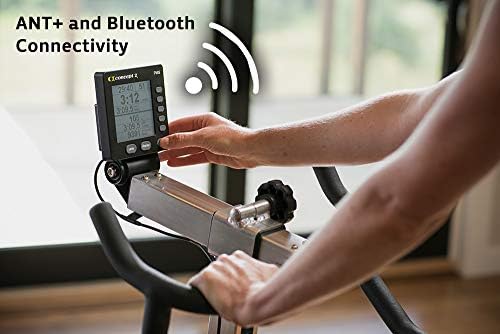
What a real console looks like
The PM5 reads watts, calories, distance, pace, heart rate over wireless, and writes the session to a USB drive or a phone over Bluetooth. No subscription. No paywalled metrics. The screen is greyscale and small. The numbers behind it are honest.
This is the differentiator. Consumer-tier consoles look better and lie. The PM5 looks worse and does not.
Reader email, March 2026, after switching from a S$600 magnetic bike to a PM5-equipped frame.
Decision 5: does the math beat ActiveSG or a gym membership?
The decision most upgrade buyers skip. A top-tier home bike at S$2,000 has to justify itself against the two cheaper alternatives that are already available in Singapore: ActiveSG at S$15 a month for unlimited access to commercial cardio machines, or a private gym at S$80 to S$150 a month with the same.
The cost-per-session math, run on a S$2,000 bike over four years of ownership at three rides a week, lands around S$3.20 a session. ActiveSG, at three rides a week, lands at S$1.15 a session. The home bike costs roughly three times what the public option costs per use.
It still wins on three conditions. Your commute to the nearest ActiveSG sport park is over 20 minutes. You ride at hours the public gym is closed or crowded. You train with a metric (real wattage, structured intervals from a coach) that the public-gym bike does not provide. If none of those three are true, the upgrade is a comfort purchase, not a training purchase, and you should price it as such.
| Option | Cost over 4 years | Cost per ride (3x/week) | Best for |
|---|---|---|---|
| ActiveSG cardio room | S$720 | S$1.15 | General fitness, social motivation |
| Mid-tier home bike (S$800) | S$800 | S$1.28 | Comfort, noise, schedule flexibility |
| Top-tier home bike (S$2,050) | S$2,050 | S$3.28 | Real wattage, serious training |
Putting the five decisions together
The walkthrough collapses to four sentences. If you are not using the current bike 12 times a month, do not upgrade. If you can name one specific failure mode and only one, match the tier to it. If the failure mode is the console or resistance ceiling, go top tier. If the failure mode is anything else, mid tier is correct.
The top tier earns its money for one specific reader: someone training off real wattage targets, riding 4+ times a week, for whom the nearest ActiveSG is too inconvenient or too crowded. For that reader, the Concept2 BikeErg or an equivalent power-meter bike is the answer. For everyone else, the mid tier or the public gym is correct.
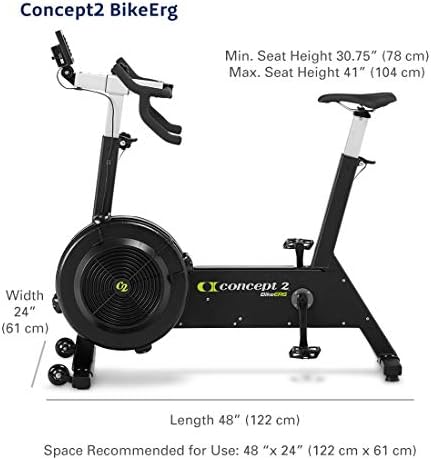
Footprint for HDB planning
122 cm by 61 cm. Seat adjusts 78 to 104 cm, fitting riders roughly 150 cm to 195 cm. Tape this rectangle on your floor before ordering anything in this tier. If the rectangle does not fit with one metre of clearance behind for dismount and 30 cm in front for the flywheel cone, the upgrade is structurally blocked, not financially blocked.
This is the silent killer of top-tier upgrades in Singapore HDB rooms. Measure first.
What to do with the bike you are replacing
List it on Carousell before the new one arrives, not after. The new bike sitting next to the old one for three weeks while you "list it eventually" is how the old bike ends up at the lift lobby with a "free" sign on it.
Mid-tier magnetic bikes hold 40 to 50 percent of original price if under 18 months old with clear photos and a competitive price. Entry-tier bikes hold 25 to 35 percent. Top-tier bikes like the BikeErg and Wattbike hold above 60 percent at the two-year mark, but the resale market is thin.
When to not upgrade at all
Three cases. The cycling habit is more important than the bike. None of these are weakness, they are saving you S$1,500.
- You ride fewer than 8 times a month. A new bike does not buy consistency. It buys an expensive object that documents the inconsistency.
- You are moving within 12 months. A top-tier bike weighs 30 to 50 kg assembled and movers charge by item. The break-down and reassembly cycle loosens fittings. Wait until the housing stabilises.
- Your training goal is general health, not metric improvement. The PM5 and Wattbike differentiator is a power meter. If you do not train off watts, the upgrade is paying for a feature you will not use. Mid tier, or the public gym, is the right answer.
If you are in any of these three, close the tab. The honest next step is to find an ActiveSG sport park near home and ride the commercial bike there 12 times. If you still want the upgrade after that month, the case has earned itself.
Common questions
Is the Concept2 BikeErg quiet enough for an HDB flat?
Quieter than an air bike with arm pumpers like the Assault or Schwinn AD7, louder than any magnetic bike. The fan note sits around 65 to 70 dB at hard effort, comparable to a hairdryer one room away. Fine for daytime HDB use. For late-night riding when the neighbour is sleeping, switch to a mid-tier magnetic bike for that use case.
What if I want the PM5 console but cannot stretch to S$2,000?
The PM5 only ships on the Concept2 family (RowErg, BikeErg, SkiErg) and is not retrofittable. The alternative is a clip-on power pedal (Garmin Rally, Favero Assioma) on the bike you already own, which runs S$1,400 to S$1,800 for the pair. Whether that beats just buying the BikeErg depends on whether the rest of the upgrade matters to you.
Should I get a Peloton-style bike with a built-in screen instead?
Only if the workout class is the product, not the bike. The console runs on a paid subscription around S$32 to S$60 a month. Cancel the subscription and the screen reverts to a basic display. The bike itself is a mid-tier magnetic in disguise. If you would not pay the subscription forever, do not buy the bike.
How long do top-tier exercise bikes actually last?
The Concept2 frame line dates to 2017 for the BikeErg and 1981 for the RowErg. Bearings and chains are replaceable wear items. Commercial gyms have machines in this family with 10,000+ logged hours that still pass calibration through the official Concept2 service program. For a home rider three to five hours a week, this is two-decade hardware.
Is a second-hand top-tier exercise bike a good upgrade?
Yes, with care. Concept2 publishes a serial-number lookup for manufacture year. Inspect the flywheel housing for cracks, spin the fan free and listen for bearing rumble, check the PM5 for water damage at the battery contacts. A used BikeErg at 18 to 24 months lists at S$1,300 to S$1,500 in Singapore, the cheapest legitimate path into the top tier.
Does the cost-per-session math beat ActiveSG?
No. A S$2,000 home bike at three rides a week over four years works out to S$3.28 per session. ActiveSG, at the same frequency, lands at S$1.15 per session. The home bike wins only on three conditions: your nearest ActiveSG is over 20 minutes away, you ride at hours the public gym is closed or crowded, or you train with a metric the public-gym bike does not provide. ActiveSG membership rates have held at S$15 a month since 2016.
Prices and stock checked May 21, 2026. Re-verify on listings before ordering.
Affiliate disclosure: Gyms.sg earns a commission on qualifying purchases at no additional cost to you. ActiveSG, Wattbike, Peloton, and Carousell references are unaffiliated.
Related Guides
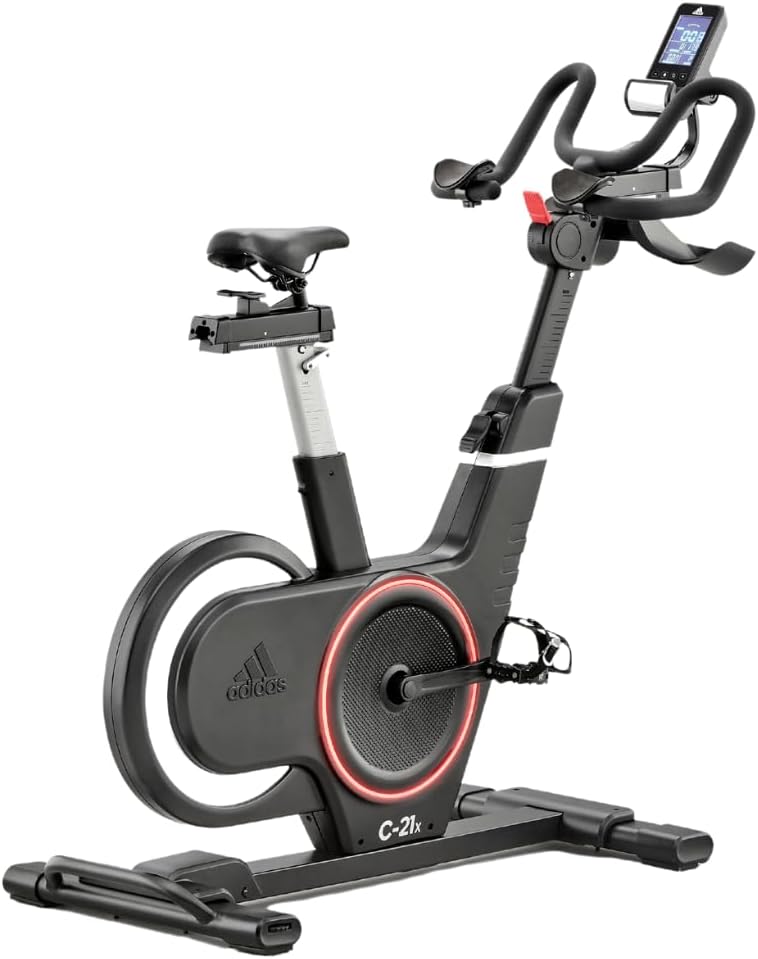
The Spin Bike Mistakes That Cost the Most in a Singapore HDB
Five failure modes that wreck most home spin bikes in Singapore, plus the one pick that actually survives HDB
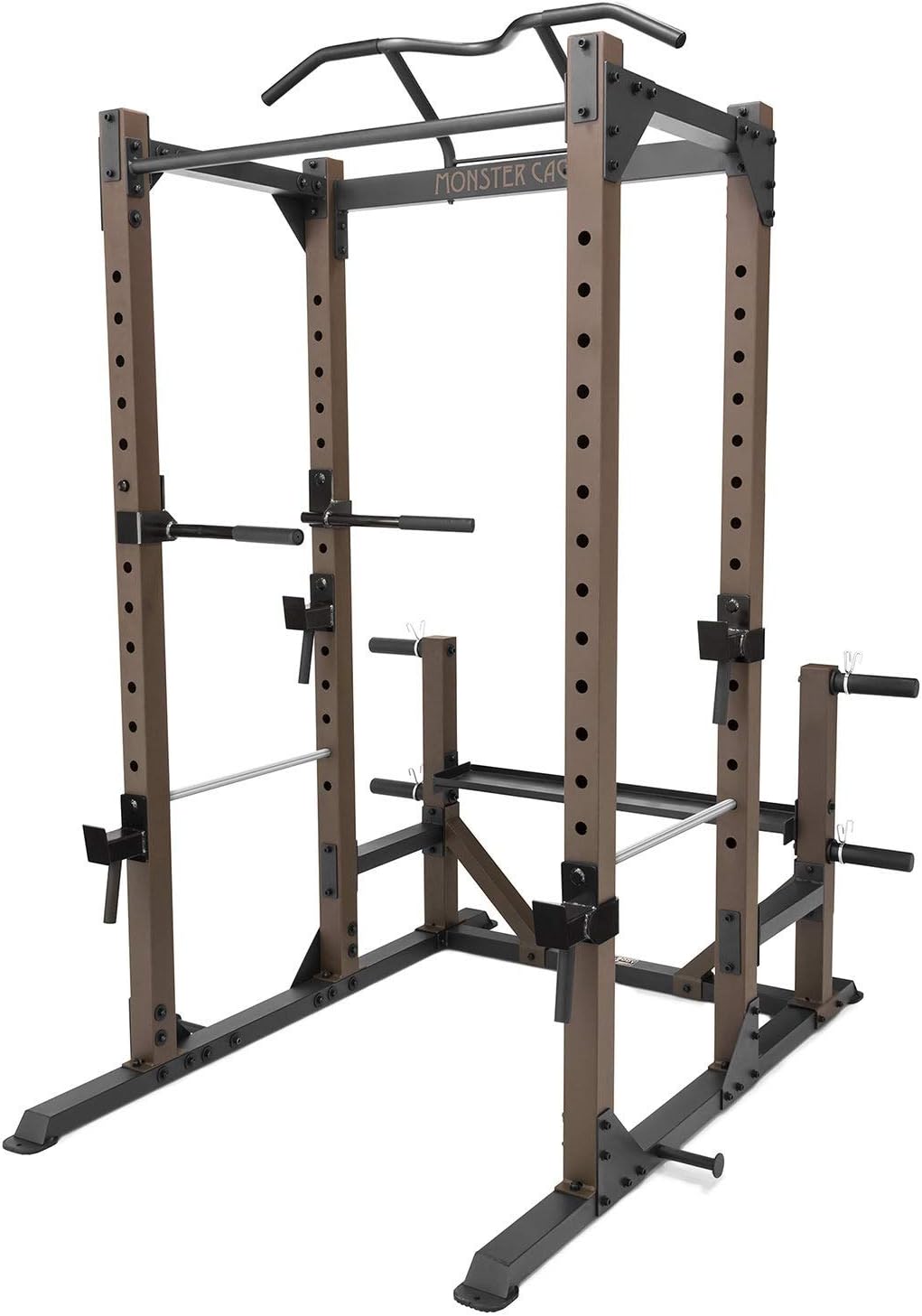
HDB Home Gym Build: The Five-Decision Walkthrough
Five decisions govern an HDB home gym build. Make them in this order , rack architecture, rack height, plate m
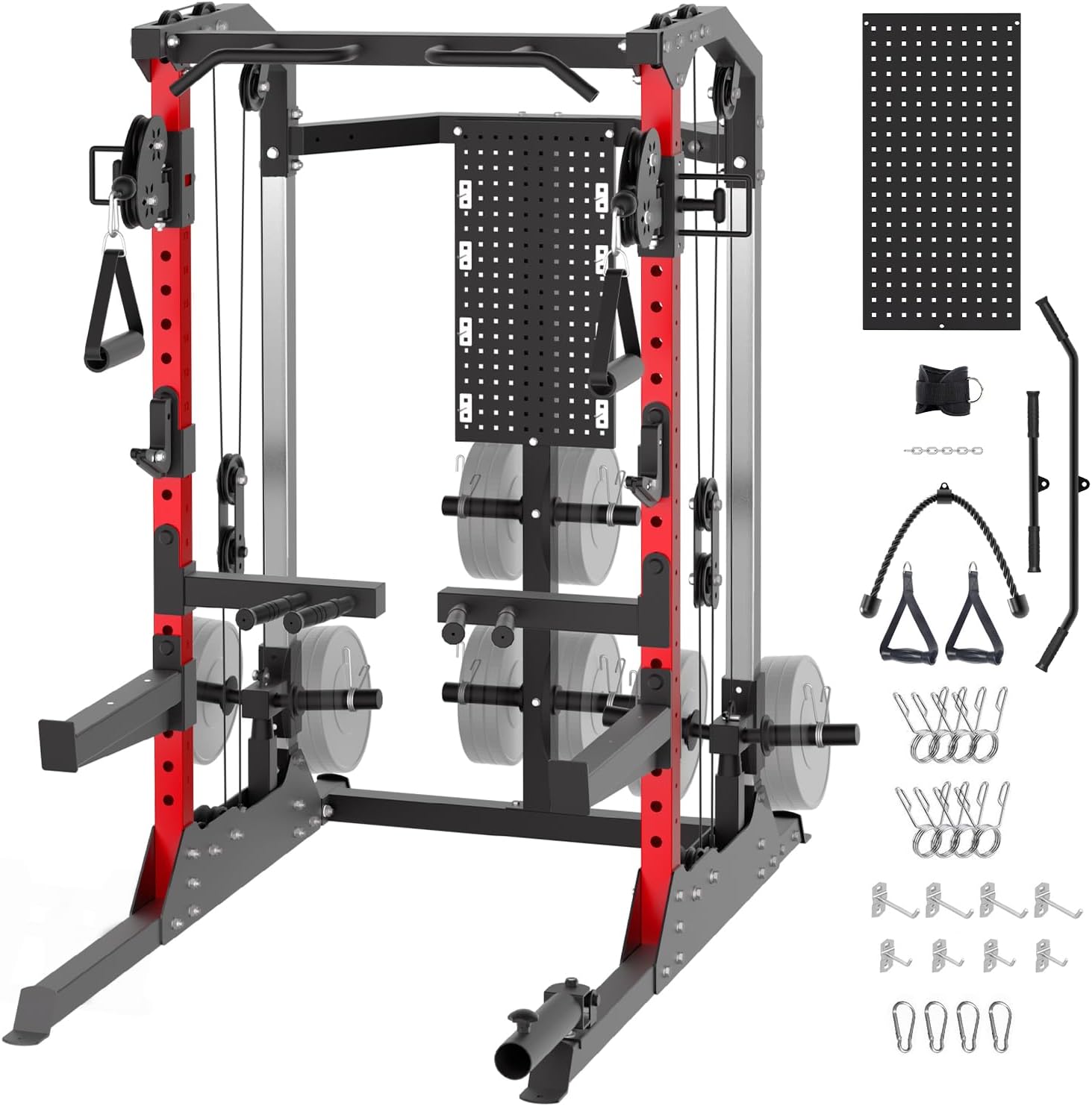
The Squat Rack Tier Most Singapore Buyers Get Wrong in 2026
The ladder framing (cheap rack first, upgrade later) is a category error. The arithmetic and the steel-gauge e
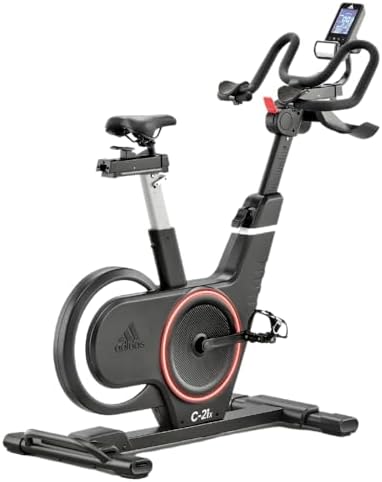
The Adidas C-21X Is the Spin Bike I'd Put in a Singapore HDB at This Price
Adidas C-21X buying guide for Singapore: compare the listed fit, dimensions and resistance features, and confirm the exact specification, delivery and support with the seller.