
The Elliptical Setup That Replaces Your Gym Membership
A S$2,053 home elliptical, the cost-per-session math against ActiveSG and a S$145 commercial membership, and the honest read on a stride spec that does not match the listing title.
OnWhey is our own supplement brand.
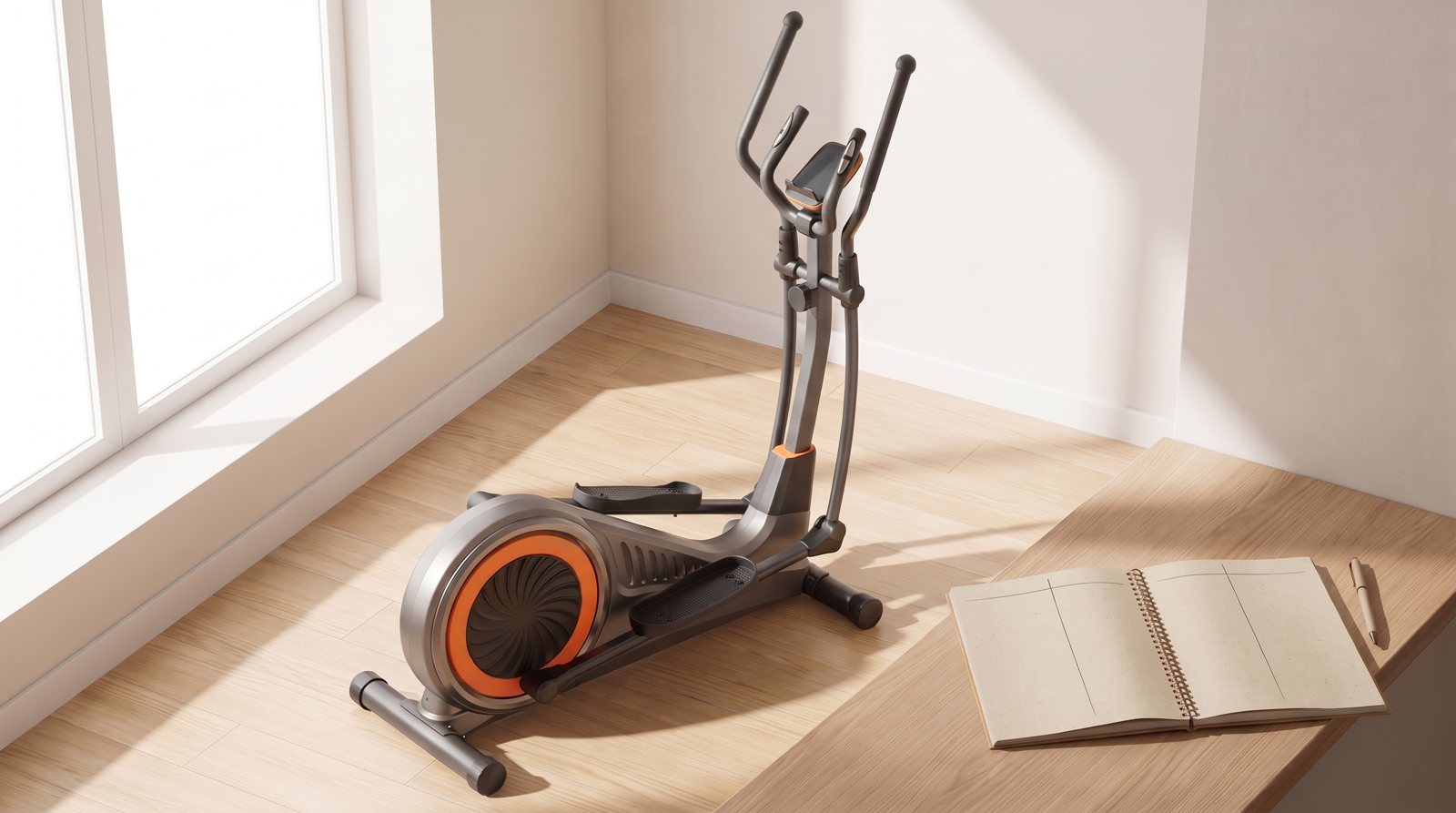
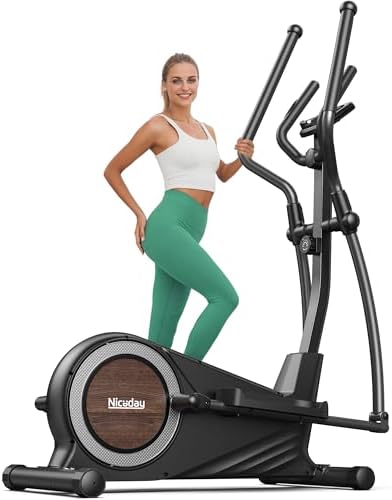
A higher-spec Niceday elliptical has been quietly listed in Singapore at S$2,053.26, and the question filling the desk inbox this month is the same one: at that price, does owning the thing replace a gym membership, or is it just an expensive shelf? No one on the gyms.sg desk has owned this specific Niceday model. What follows is the math, read against every credible Singapore owner review of this SKU plus the manufacturer's own listing and the seven product photos the listing actually ships to a buyer in a Singapore lift lobby.
If you came here from the desk's earlier Niceday elliptical review for the lower-spec CT11 model, the framing is different. That piece is the buyer's review of the entry Niceday: what it is, who it fits, what the build feels like. This piece is narrower and more honest about money. The question is whether the cost-per-session arithmetic on a S$2,053 home machine beats the cost-per-session arithmetic on a Singapore gym membership across realistic training frequencies a working adult actually keeps to.
The price anchor, and what the money could buy instead
S$2,053.26 is real money in Singapore. For the same outlay, a working adult could buy roughly 11.4 years of ActiveSG access at the S$15 monthly cadence, 14 months of a mid-tier commercial membership at S$145 a month, or 821 single-entry ActiveSG sessions at S$2.50 a head. The worth-it question is concrete: will the household use the unit enough, often enough, for long enough, to beat one of those alternatives on a per-session basis?
A second framing matters in Singapore specifically. Commute time to the gym is not free. For the median HDB block, the nearest ActiveSG centre is 8 to 18 minutes door to door; the nearest paid commercial chain is similar. A 45-minute cardio session at the gym is realistically a 75 to 80 minute time block. A 45-minute session at home is 45 minutes. Over a year of consistent training, that delta is what tips the math.
What you actually get for the S$2,053
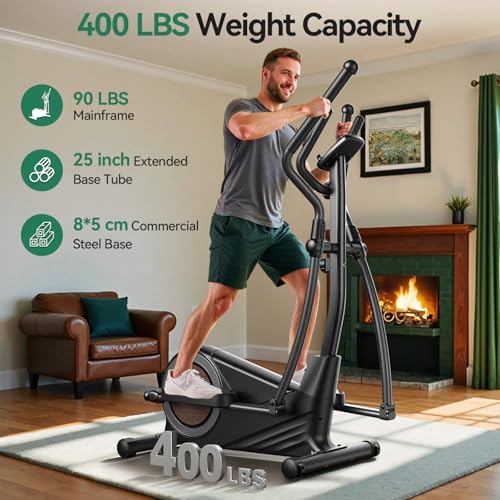
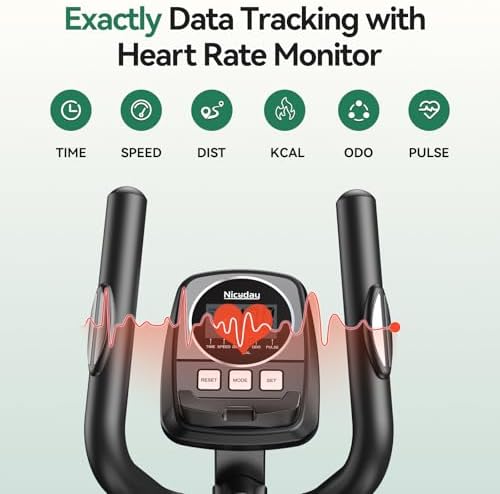
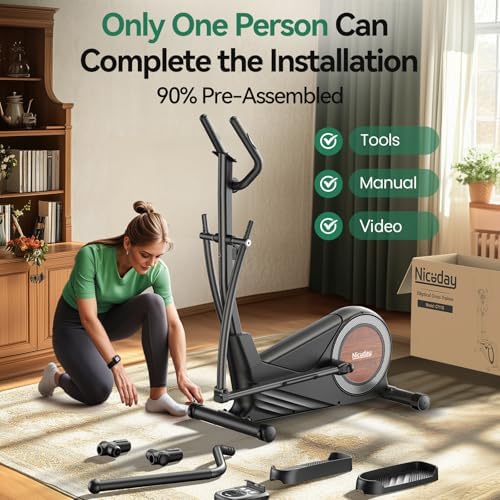
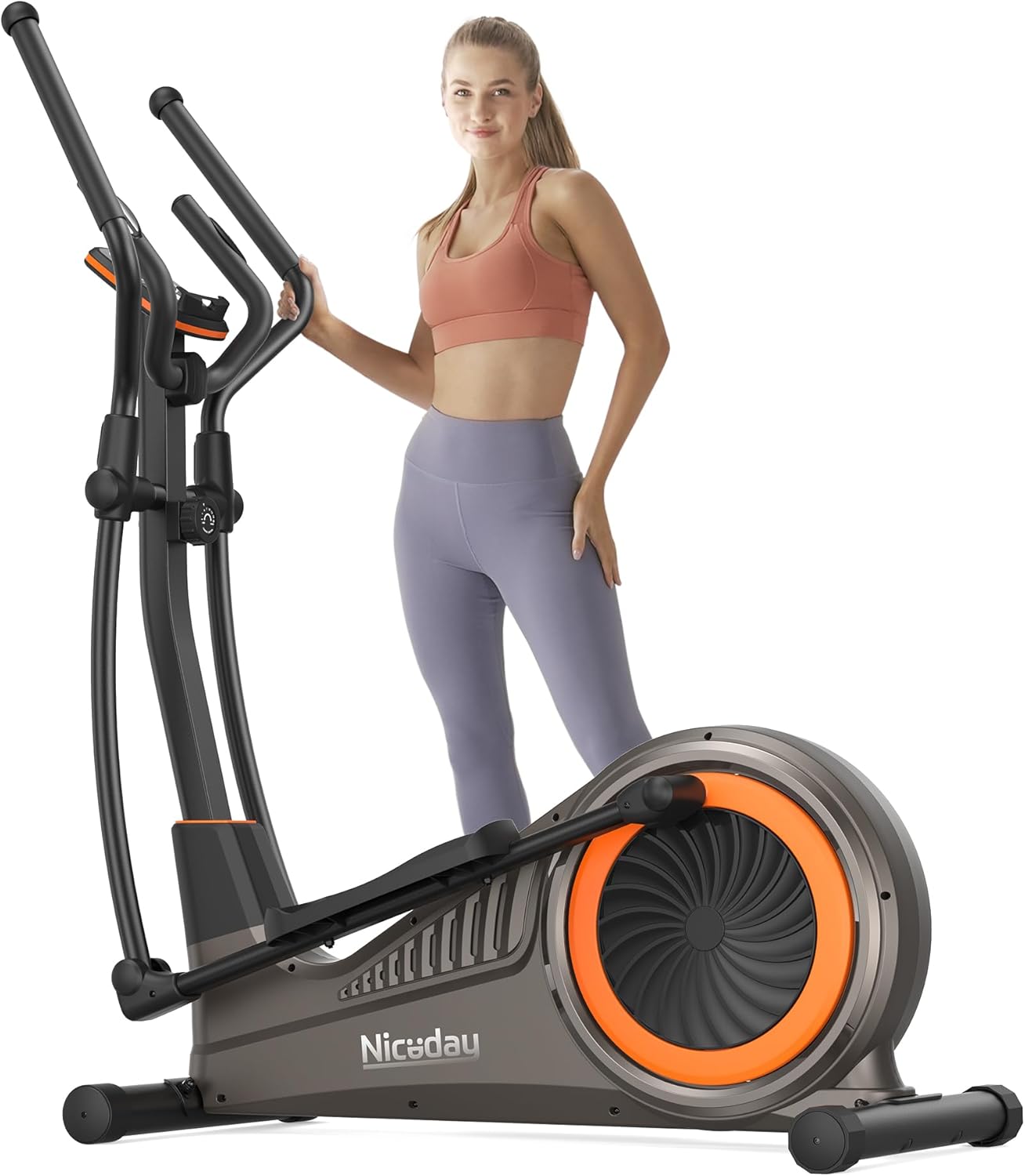
The verified hardware, read against the gallery photos rather than the headline copy on the listing, is a 16 lb commercial-tier flywheel, 16 levels of magnetic resistance driven by a 16-magnet array, a 90 lb mainframe rated for users up to 400 lb (about 180 kg), a 25-inch extended base tube with an 8 x 5 cm commercial steel base, a sub-20 dB advertised noise floor under load, a basic LCD console reading time, speed, distance, calories, odometer and pulse, and an arriving-90-percent-pre-assembled box that one adult can finish setting up in 20 to 30 minutes with the included tools.
Here is the honest part, and you need to read it before any cost math lands. The product title on the Singapore listing reads "Niceday Elliptical Exercise Machine with 15.5IN-19IN Stride." That phrasing implies an adjustable stride that ranges from 15.5 inches to 19 inches; a tall user could supposedly dial the unit up to give a longer glide. The manufacturer's own first feature bullet contradicts that title; bullet one reads "15.5IN Stride without Knee Pressure" and locates the comfort sweet spot at users up to 5'11". The gallery photo carries the same overlay: "15.5 Inch Light-Commercial Stride," with a user-height range of 4'11" to 5'11".
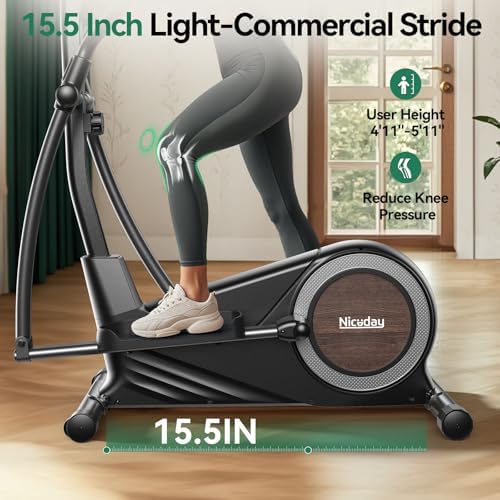
So treat the headline "15.5IN-19IN" with caution. When the title narrative and the product photos diverge, the photos are what you can hold the seller to under Singapore consumer-protection law. Read this unit as a fixed 15.5-inch stride elliptical, light-commercial frame, comfortable for users from about 1.50 m to about 1.80 m. If you are 1.83 m or taller, the cost math below has to be discounted, because part of what you are paying for, the stride range, is not what the title says it is.
The strongest case for buying
The single feature that pushes the worth-it math toward "buy" is the noise floor. Niceday markets the magnetic drive at less than 20 dB; the gallery image carries the same overlay, and Singapore owner reports back it: the machine itself is genuinely quiet, the loudest sound during a session is the user's own footfall and the squeak of clothing against the moving handlebars. For a 6 a.m. or 10 p.m. session in an HDB where a partner or a child is asleep on the other side of a thin wall, that is the difference between a machine that gets used 4-plus times a week and a machine that gets used twice and then guilt-trips the buyer.
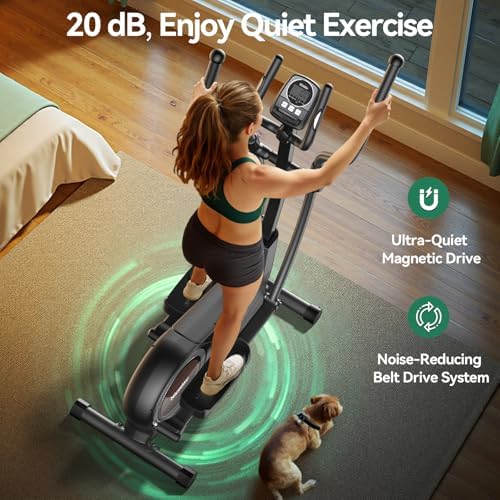
The second case for buying is the frame rating. A 90 lb mainframe under a 400 lb user-weight ceiling is structurally one tier above the typical S$700 to S$1,200 home elliptical, which usually rates around 250 lb and starts to flex audibly under heavier users at higher resistance. If anyone in the household is in the 90 to 150 kg range, the cheaper machine is a false economy; this one is built for them. The third case is the build window. Twenty to thirty minutes from open-the-box to first session, one person, no second-trip-to-the-hardware-store, no afternoon lost.
The strongest case against
The case against is the console and the stride misrepresentation. The console is a basic LCD with no backlight, no built-in programs, no instructor video, no third-party connection to Zwift or Peloton. Bluetooth pairs to a free Kinomap-tier app for basic logging. If you need guided sessions to press the pedals for 40 minutes, this is the wrong machine. A more honest version would price the console-light experience S$200 lower.
The stride point matters more for the worth-it math than the console. If the household's tallest user is 1.83 m or taller, the title's 19-inch promise is what made them comfortable with the price; the photos walk it back. For that buyer, the practical stride is about 3.5 inches shorter than they thought, the motion feels closer to a brisk in-place march than a glide, and the equipment will spend more time as decor. For users between 1.50 m and 1.78 m, the 15.5-inch stride is honest and the cost math holds.
The cost-per-session math, three honest frequencies
The price is fixed at S$2,053.26. The variables are sessions per year and how long the frame lasts. The desk assumes a conservative seven-year useful life on the frame, the median Singapore home-elliptical owner report for the broader category; the flywheel and bearings outlast that window, the console electronics are what may need swapping around year five. Total cost of ownership is therefore S$2,053.26 across seven years, before any battery or console replacement.
| Training frequency | Sessions / yr | Sessions over 7 yr | Cost / session (S$) | Beats ActiveSG drop-in (S$2.50)? |
|---|---|---|---|---|
| Honest light, 4x / wk | 208 | 1,456 | S$1.41 | Yes |
| Committed, 3x / wk | 156 | 1,092 | S$1.88 | Yes (marginal) |
| Realistic average, 2x / wk | 104 | 728 | S$2.82 | No |
| Resolution-only, 1x / wk | 52 | 364 | S$5.64 | No |
Read the table honestly. At three sessions a week, sustained for seven years, the machine costs S$1.88 a session, which is below the ActiveSG drop-in rate. At four sessions a week it falls to S$1.41 a session, which is below the rate any commercial gym in Singapore charges on a per-visit basis. The math breaks at two sessions a week. Below that, you are paying more per session than you would for an ActiveSG drop-in, and the equipment is structurally a worse deal than just walking to the public gym.
Now layer in commute-time saved. Assume an 8-minute walk each way to the nearest ActiveSG (generous; for many HDB blocks it is 12 to 15 minutes). That is 16 minutes saved per round trip. At three sessions a week for seven years, that is 17,472 minutes, or roughly 291 hours of waking life. At a Singapore median hourly wage near S$22, that time is notionally worth about S$6,400. The math does not require you to monetise the commute, but it does suggest the equipment at three sessions a week returns the household either S$1.88-a-session cardio or about 41 hours a year back, depending on how the household values its time.
Membership comparison, the second table that matters
| Alternative | Monthly cost | 7-yr total | Break-even point |
|---|---|---|---|
| ActiveSG drop-in @ S$2.50, 3x/wk | ~S$32.50 | S$2,730 | Year 5.3 |
| ActiveSG monthly pass (rough Singapore norm) | S$15 | S$1,260 | Never (under usage assumed) |
| Commercial mid-tier (e.g., Fitness First, Anytime) | S$145 | S$12,180 | Year 1.2 |
| Boutique class pack (S$35/class, 2x/wk) | ~S$303 | S$25,452 | Month 7 |
Read this carefully. The machine never beats a S$15 ActiveSG monthly pass on dollar cost alone; ActiveSG at that price is structurally one of the best deals in the world for public cardio, and no home equipment beats it on the spreadsheet. What the machine beats is the time penalty of getting there. Against a S$145 commercial membership, the elliptical pays itself back inside the first 15 months and runs free for the next 70. Against boutique cardio classes, it pays itself back inside seven months, which is one of the cleanest cardio-equipment break-even stories in this price bracket. Against ActiveSG drop-ins at three a week, the machine breaks even on cash at year 5.3 and then runs free for the remaining 20-plus months of the assumed life. That is the realistic worth-it window.
Who the math works for
It works for the household where the working adult is between 1.50 m and 1.78 m and currently pays a S$130-plus monthly commercial membership they use fewer than three times a week. Switching the membership to the home unit pays it off inside 15 months and lifts session frequency, because the activation energy of starting in the next room is materially lower than the activation energy of getting to a gym. It works for the household where one adult is in the 90 kg-plus range and is uncomfortable with how a S$900 entry elliptical flexes under load; the 90 lb mainframe is a real step up. It works for the shift worker or the new parent whose training windows fall outside ActiveSG operating hours.
Who the math doesn't work for
It does not work for the household where the tallest adult is 1.83 m or taller and was attracted by the "19-inch stride" line in the title; the gallery does not support that number and the workout feels cramped. It does not work for the household that currently uses ActiveSG at the S$15 cadence and is happy with it; the dollar math never catches the public-gym subsidy. And it does not work for the buyer who needs instructor video to start a session; that buyer's worth-it math is a Peloton-tier machine at twice the price.
The verdict
The worth-it verdict
Worth it if a working adult in the household is between 1.50 m and 1.78 m, currently spends S$130 or more a month on a commercial gym they use fewer than three times a week, and is willing to commit to three sessions a week at home for the first year. Under those conditions the machine pays back inside 15 months and runs at roughly S$1.88 a session for the next six years. Not worth it if the household's primary user is 1.83 m or taller, if the current gym solution is a S$15 ActiveSG pass that already gets used, or if the buyer requires instructor video to press start. The stride number in the title (15.5 to 19 inches) is not supported by the bullets or the gallery; treat this unit as a fixed 15.5-inch stride machine when checking your own fit, and discount accordingly.
What would change the verdict. A price drop below S$1,800 would push four-sessions-a-week cost-per-session below S$1.30 and would close the ActiveSG-drop-in gap even at two sessions a week. A revised model with genuine variable stride, gallery overlay matched to the title, would broaden the buyer-fit window to taller users. A price jump above S$2,400 would push break-even past year seven on a commercial-membership swap and tip the recommendation against, since seven years is the limit of what the desk is willing to project on a home-tier frame.
If your numbers fit the worth-it window above, the listing is at the current Niceday product page (Amazon.sg listing unavailable on 22 September 2026), S$2,053.26 as of late May 2026, sold and shipped by a Singapore-resident seller. The desk will revisit this math if the price moves more than 10 percent in either direction, if Niceday clarifies the stride spec on the photo overlay, or if Boomerang Buys SG ships a hardware revision under the same model identifier.
For anyone still upstream of the question, the desk's longer elliptical buying guide for Singapore HDB owners covers the framework. And if you want the entry-Niceday read first, the CT11 review covers that lower-spec model at S$1,697.08, where the math is different and the frame rating is one tier softer. This page is about whether the higher-spec, S$2,053 Niceday actually replaces your gym membership. For the right buyer, the answer is yes for about six of the seven years the desk is willing to project.
Related Guides
Niceday Elliptical Review: Honest Read for a Singapore HDB
Niceday elliptical buying guide for Singapore: check the exact model, stride, dimensions, delivery and servicing before deciding whether it fits your home.
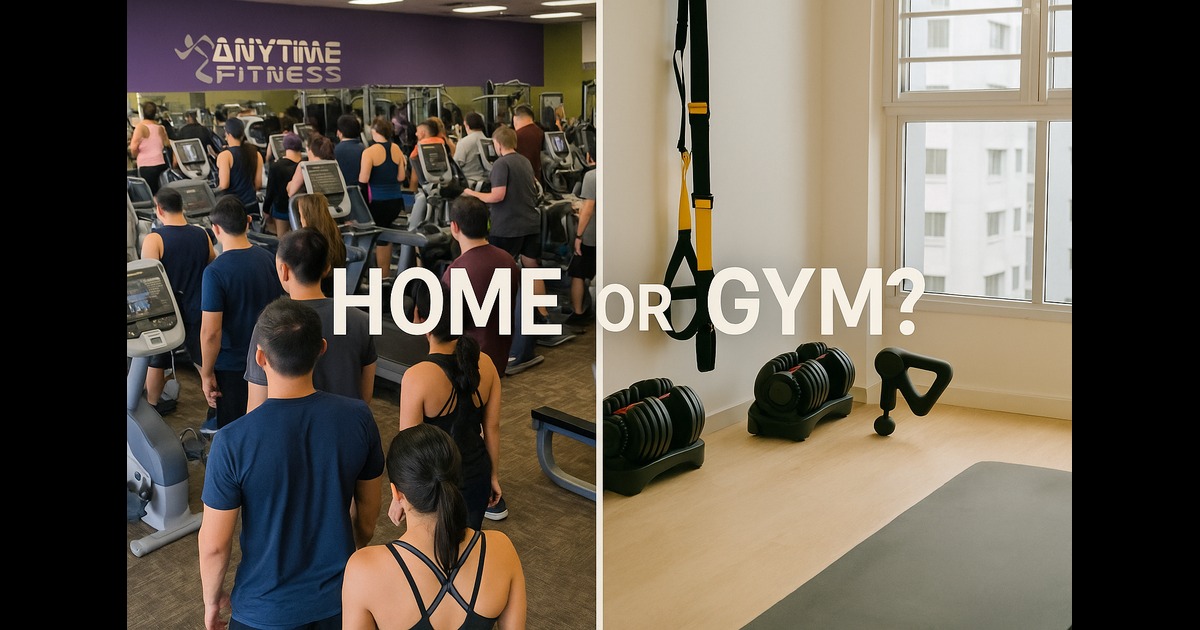
Home Gym vs Gym Membership Singapore: Cost Breakdown Over 5 Years
Home gym vs gym membership in Singapore , full 5-year cost breakdown across budget chains, boutique studios, a

Picking a Home Elliptical in Singapore (2026): One Pick, Plus What to Skip
Compare elliptical stride, available floor space, ceiling clearance and servicing before deciding whether ownership fits your routine.
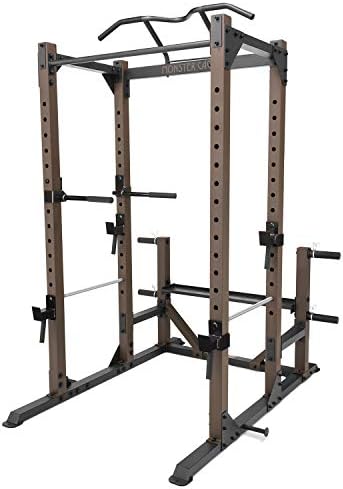
Steelbody Monster Cage Review: Honest Read for a Singapore HDB Lifter
Steelbody Monster Cage buying guide for Singapore: compare the listed footprint, attachments and installation needs, and confirm the exact model and support before ordering.