
The Squat Rack Tier Most Singapore Buyers Get Wrong in 2026
The ladder framing (cheap rack first, upgrade later) is a category error. The arithmetic and the steel-gauge evidence point at one tier on day one.
The conventional wisdom on a first Singapore home squat rack reads like this. Buy the S$280 starter rack on Shopee. If you stick with lifting past the first few months, sell it on Carousell and upgrade to something in the S$700 commercial-grade range. If you really go all in, save up and buy a Rogue or Eleiko through a local distributor later. The path is framed as a ladder. Start cheap, prove you'll use it, then trade up. Every Reddit thread on r/singapore fitness, every Facebook home-gym group, and roughly half the local YouTube reviewers tell that same story.
That story is wrong, and it's wrong in a specific way. The TL;DR: most Singapore squat-rack buyers don't buy the wrong brand, they buy the wrong tier. The S$280 rack and the S$700 rack are both incorrect answers for the same buyer, the one who'd actually progress past 100 kg in their first year. The right answer for that buyer is the S$1,500 to S$1,800 tier on day one. The arithmetic gets there quickly, the engineering gets there faster, and the part most readers skip is that the two cheaper tiers fail for the same root reason, not two different ones.
This article makes that case. It is not a roundup of five racks with little pick cards. It is the argument that the ladder framing is a category error, plus the math and the steel-spec evidence to show why, plus the prescription at the end.
The first piece of evidence is the steel
Every squat rack listing on a Singapore marketplace advertises a static load rating. Static load is what the rack can hold when nothing is moving, the barbell parked on the J-cups, no human pulling on it, no plates being unracked or re-racked. The number sounds impressive. 600 lb static load on a S$280 listing. 1,000 lb static load on a S$700 listing. The buyer reads 600 lb (272 kg) and thinks, fine, I'll never lift anywhere near that, this rack will outlast me.
The problem is that static load is not the working number. Dynamic load is. Dynamic load is what the rack endures when a 140 kg barbell is being driven into the J-cups during a re-rack at the top of a heavy set, when the safety arms catch a failed squat, when the pull-up bar takes a kipping pull-up from an 80 kg lifter. Dynamic load is roughly a third of static load on a well-engineered rack, less on a badly-engineered one. The S$280 rack's 600 lb static rating means roughly 200 lb (90 kg) of safe working load, which is fine for the first six months of a new lifter's progression and not fine for anything after that.
Why does this happen? Steel gauge. The cheap rack uses 14-gauge tubing, which is 1.9 mm wall thickness on a 50 mm square upright. The S$700 commercial-grade rack uses 12-gauge tubing, which is 2.6 mm wall thickness. The S$1,500 to S$1,800 tier uses 11-gauge tubing on 2x3 inch (50 x 75 mm) uprights, which is 3.0 mm wall thickness. The difference between 14-gauge and 11-gauge is 58% more steel in every cross-section, and the difference shows up in lateral flex the moment a weight crosses 120 kg. Thinner steel flexes laterally during an unrack. The safety pins rattle in their oversized holes. The whole frame transmits the bounce of a hard re-rack through the floor. Rogue's R-3 cage, the global reference standard for a home power rack, runs 11-gauge 2x3 inch uprights and is rated for 454 kg of working load. That gauge is what the buy-once tier copies. The S$700 tier does not. The S$280 tier is not even in the same league.
The second piece of evidence is the arithmetic
Here is the cost of the ladder framing, traced honestly. The buyer spends S$280 on the starter rack in month one. They train for eight to ten months, their squat moves from 60 kg to 120 kg, and the rack starts to feel wrong, the kind of wrong that makes them check the welds before every working set. They list the rack on Carousell for S$130, lose three weeks waiting for a buyer, and replace it with a S$700 commercial-grade rack plus a pull-up bar and J-cup spacing kit that didn't come stock, total S$850. Two years in, the same buyer is now squatting 140 kg and deadlifting 170 kg, and the S$700 rack starts doing the same thing the S$280 rack did, just at a higher load. They upgrade again, this time to the S$1,659 Power Cage tier they should have bought from the start, and the previous rack goes on Carousell for S$350. Net spend across the three rungs: S$280 + S$850 + S$1,659, minus S$130 and S$350 in resales, equals S$2,309. Plus the freight, the disassembly twice, the eight weekends of moving steel through an HDB lift.
The buy-once spend is S$1,659. The ladder costs S$650 more in cash, plus the time, plus the floor space cycling. The ladder makes sense only if the buyer is genuinely uncertain whether they'll stick with lifting at all, in which case they shouldn't buy any rack, they should pay S$15 a month for the ActiveSG Sport Park gyms in Tampines or Bishan or Heartbeat@Bedok and decide after six months. The decision is binary, not three-stepped. Either you'll lift seriously and the S$1,659 tier pays back in 18 months, or you won't and any home rack is wasted money. There is no honest middle.
The ladder framing exists because Shopee and Lazada are optimised for cart conversion, and a S$280 listing converts better than a S$1,659 listing. The platform's interest is your starter purchase, not your strength progression. Local YouTube reviewers repeat the ladder advice because most of them got their racks for free from the brands making the cheap tier, and the brands selling at the buy-once tier don't bother with affiliate programs in Singapore. The advice is honest only at the platform's layer. It is not honest at the buyer's layer.
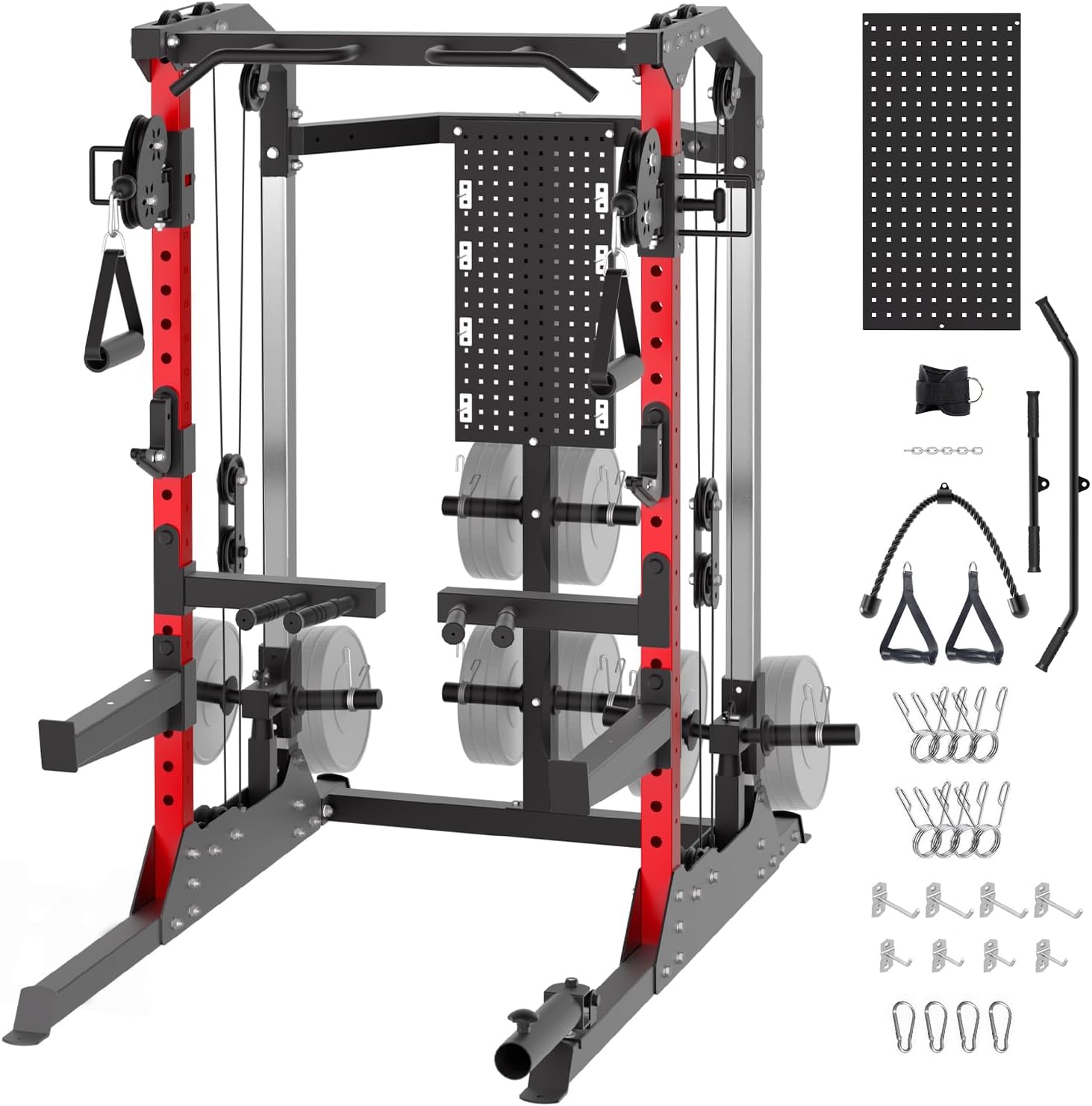
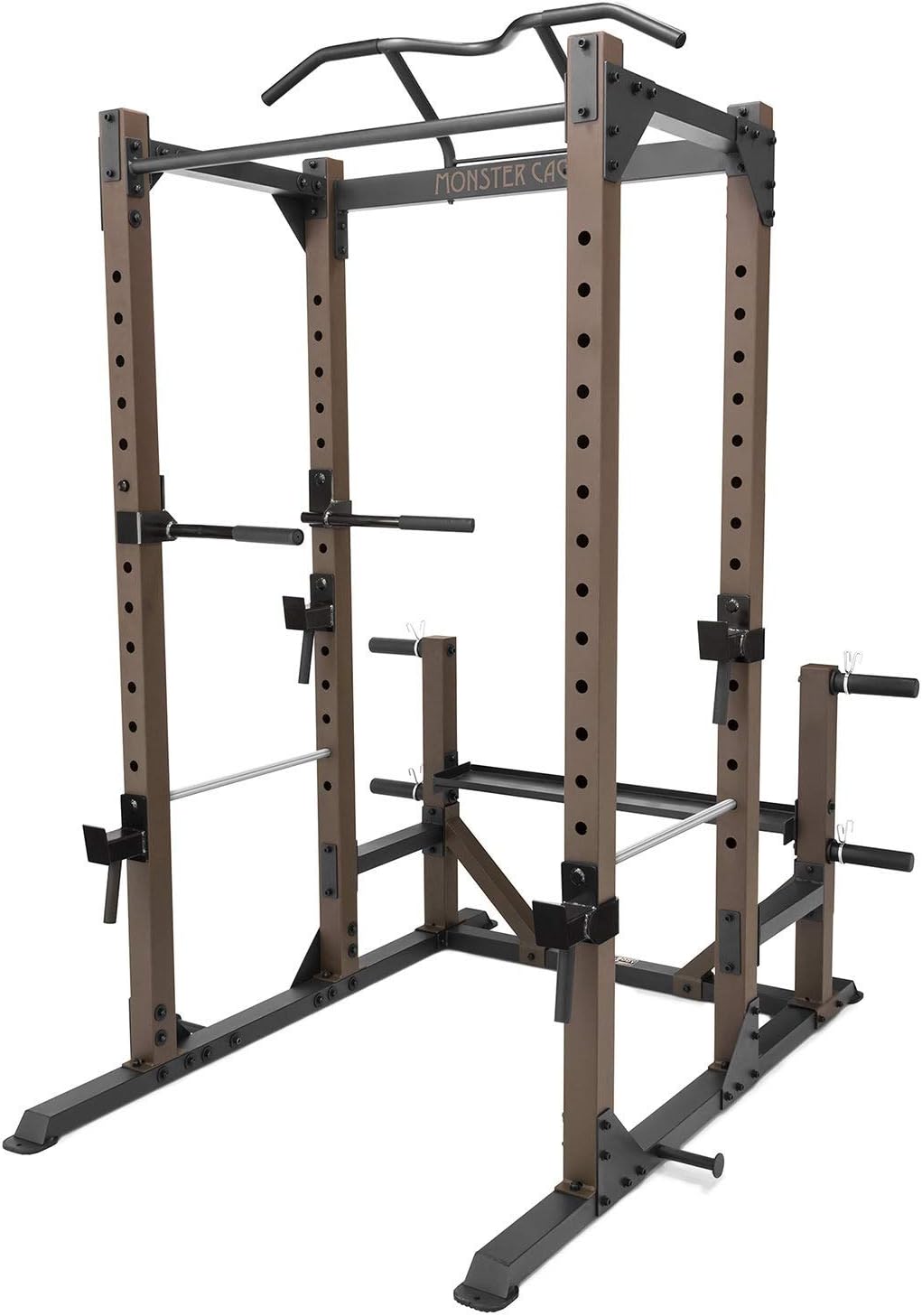
The rack that earns this argument's prescription, for what it's worth, is the . 11-gauge 2x3 inch steel uprights. 450 kg working load rating. Dual independent pulleys with cable crossover, which earns its place over the life of the rack by replacing three accessory machines worth of floor space in a 4-room HDB flat. Westside hole spacing in the bench zone, which is what makes the difference between an easy bench-press unrack and a shoulder strain you didn't ask for. None of these specs are exotic. They are simply what 11-gauge engineering brings standard, and what 14-gauge engineering can never bring at any price.
The strongest counter-argument, and where it's partly right
The honest objection to a buy-once argument is this. Most people who buy a home squat rack stop using it within 18 months. The unused rack ends up draped in laundry. The buyer realises they prefer the social energy of a real gym, or their schedule shifts, or they move to a smaller flat. If the failure case is 18 months of disuse, then the S$280 rack was cheaper to fail with than the S$1,659 rack. The ladder framing concedes this risk by design, it lets the buyer fail cheaply.
This objection is partly right, and it's the reason the prescription below is conditional. If you genuinely don't know whether you'll lift seriously for two-plus years, do not buy any rack. Pay for a commercial gym or ActiveSG membership, log six months of training, and decide after the data is in. The mistake is not the buy-once tier versus the cheap tier, the mistake is buying a home rack before you know whether you'll use it. Once you do know, the cheap tier is the wrong answer and the buy-once tier is the right one.
Where the objection breaks down: among lifters who actually do stick with home training, the cheap-tier rack is also the most common reason they quit. The S$280 rack at month eight feels unsafe, the lifter stops loading it past 100 kg, the program stalls because they can't progress overload, and within three more months the rack is in the corner under a pile of laundry exactly the way the cheap-tier defenders predicted, except the cause is not loss of motivation, it is the rack's mechanical limits. The shape of the failure looks identical. The cause is not.
What to do with the argument
The prescription is a decision tree, not a recommendation. First, settle the binary question: will you train consistently for two years? Not whether you want to. Whether you will. If the answer is uncertain, the rack is the wrong purchase entirely, ActiveSG is the right one, and the HDB home gym guide is something to read in 12 months if you're still training then. If the answer is yes, the cheap and mid-tier racks are both wrong answers and the S$1,500 to S$1,800 tier is where to start.
Within that tier, the spec that decides between options is steel gauge first, attachment ecosystem second. 11-gauge uprights are the floor, not the ceiling. The cable-crossover question is real if you train in a flat where leaving the unit for accessory machines is not realistic, which describes essentially every HDB home gym. The S$2,000 build guide walks through the full kit (bar, plates, bench) that pairs with this rack tier, and the power rack vs Smith machine comparison covers the adjacent question of frame type for buyers still deciding between cage and half-rack formats.
There is a more expensive prescription that's also defensible. The Rogue R-4 or Eleiko Prestera through a Singapore distributor, around S$2,800 to S$4,500 fully kitted, with local warranty and white-glove delivery. That tier is the right call for the powerlifting-coach buyer who'll keep the rack for a decade and wants servicing inside the country. For the median serious-home-lifter buyer, the S$1,659 tier delivers 90% of the engineering at 50% of the spend, which is the better trade. The thing to avoid is the false middle, the S$700 rack that feels like a compromise and is in fact the worst answer on the menu, because it costs more than the cheap rack, performs only marginally better, and still requires replacement within two years.
Tape the rack footprint on the floor before you order. 1.3 square metres of painter's tape, where you actually plan to set it up, sat with for a week. If the corner of the HDB you keep walking past starts to feel wrong, the answer is the ActiveSG membership. If the corner still feels right after a week, the cheapest correct rack is the S$1,659 tier and the ladder framing is a story you can stop telling yourself.
Questions worth answering
Isn't 11-gauge overkill for a 70 kg squatter?
It is overkill for the squat itself. It is not overkill for the J-cup interface, the safety arms catching a failed lift, the pull-up bar absorbing a kipping pull-up, and the cable crossover anchored to the same frame. The squat is the lowest-stress thing the rack does. The rack-arounds (re-rack, safety catch, pull-up, cable work) are what concentrate force, and those are where 14-gauge fails first. Overkill on the upright is what keeps the rest of the system honest.
What about the welds, not just the gauge?
Real concern. Gauge sets the ceiling, welds set whether you reach it. Inspect the weld beads in person if you can: smooth continuous fillet welds at every joint, no skipped sections, no porosity holes. The S$1,500 to S$1,800 tier in Singapore typically ships with MIG-welded frames from factories that subcontract to the global commercial-gym brands, which is verifiable through review aggregation. The S$600 to S$900 grey-market tier is where weld quality becomes a coin flip.
Will the HDB floor handle a 450 kg rated rack plus loaded plates?
Do not use the rack’s advertised load rating as a floor rating. Confirm suitability for the exact building and installation with a qualified structural professional, including stored plates, user weight and impact. Dividing the combined weight by an assumed footprint does not establish safety, and adding plywood or rubber does not by itself make the installation suitable. Further reading: 1.5 kPa per the Singapore building code.
What if I rent and might move within two years?
The S$1,659 rack disassembles into seven crates and reassembles in a new flat in about three hours with two people. That is a non-trivial moving cost but it is bounded. The bigger question is whether the new flat has the ceiling height (2.4 m minimum for the pull-up bar) and the floor type (concrete slab, not raised wood). If you'd be moving to a condo on the 12th floor with a hollow timber subfloor, the rack stays in the old flat and ActiveSG covers the gap.
Can one person assemble this in an HDB flat?
Technically yes, realistically plan for two. The uprights weigh around 30 kg each and need to be held vertical while cross-members bolt in. Two people, three hours, and a 17 mm spanner gets it done cleanly. One person, six hours, and a frustrating call to a friend at hour four also gets it done. The garage gym setup notes cover the assembly logistics for racks at this size class.
Stock and price checked May 2026. Listings shift week to week, re-verify before ordering. Byline: the gyms.sg desk.
Affiliate disclosure: Gyms.sg earns a commission on qualifying purchases at no additional cost to you. Local distributor mentions are unaffiliated.
Related Guides
Picking a Home Elliptical in Singapore (2026): One Pick, Plus What to Skip
Compare elliptical stride, available floor space, ceiling clearance and servicing before deciding whether ownership fits your routine.
Your First Recovery Tool Shouldn't Be a Massage Gun
Most Singapore home-gym buyers reach for a massage gun first.
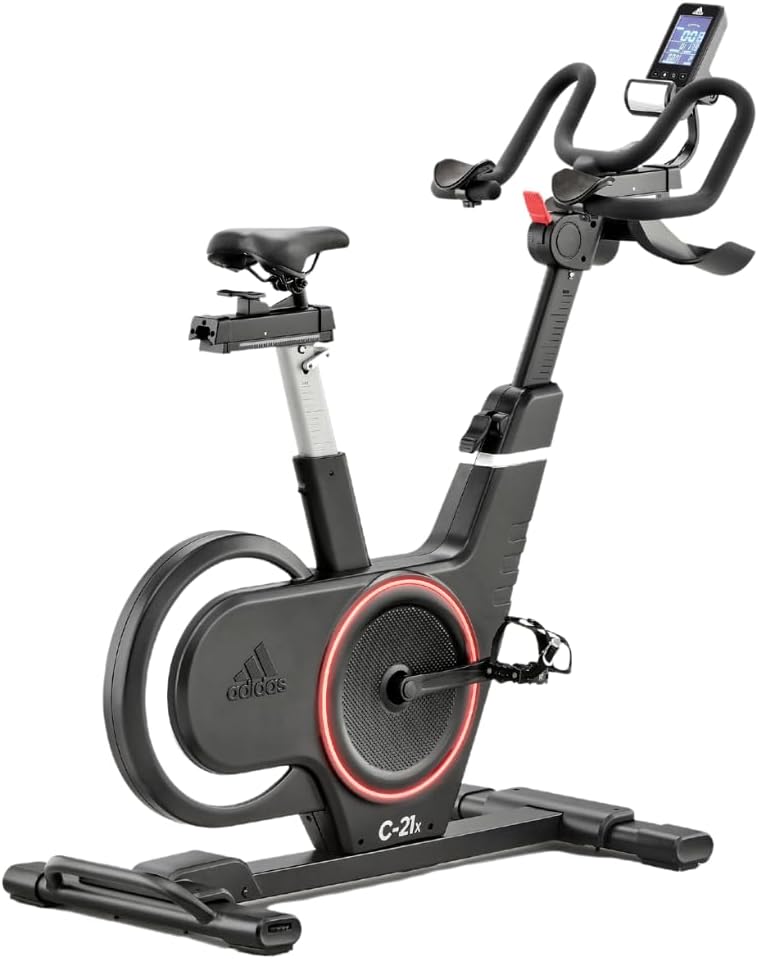
The Spin Bike Mistakes That Cost the Most in a Singapore HDB
Five failure modes that wreck most home spin bikes in Singapore, plus the one pick that actually survives HDB
The 5 Mistakes That Wreck a Home Gym Build in a Singapore HDB
Most HDB home gyms get built twice. Here are the five mistakes that force the rebuild, and the single piece of