
How to Row Properly: Singapore Guide
How to Row Properly: Singapore Guide. Expert Singapore fitness guide with actionable advice, local tips, and gym recommendations.
As an Amazon Associate, Gyms.sg earns from qualifying purchases. Links here, including to our partner brand OnWhey, may earn us a commission at no extra cost to you.
QUICK ANSWER: HOW TO ROW PROPERLY
Master the rowing machine with proper drive phase, catch position, and breathing technique. Most Singapore gyms have Concept2 rowers — start with 3x500m intervals at moderate intensity (150-160 watts for beginners).
ROWING IN SINGAPORE: WHY IT MATTERS
Look, I'll be straight with you — rowing machines are the most underused piece of equipment in Singapore gyms. Walk into any Fitness First or Pure during peak hours (7pm weekdays) and you'll see people queuing for treadmills while the Concept2 rowers sit empty. Their loss.
I spent two years avoiding that intimidating-looking machine in the corner. Then a trainer at UFIT CBD Hub showed me proper form, and everything clicked. Rowing isn't just cardio — it's a full-body strength workout that torches calories while building your back, legs, and core simultaneously.
Here's the thing about Singapore's humidity: outdoor running is brutal 8 months of the year. Rowing gives you that same cardiovascular intensity in air-conditioned comfort. Plus, it's low-impact, so your knees won't hate you the next day like they would after pounding pavement in 32°C heat.
This guide covers everything I wish someone had told me when I first approached that intimidating machine. We'll break down proper technique, progression protocols, and which Singapore gyms have the best rowing setup. No fluff, just what actually works when you're paying $100+ per month for membership.
BEST ROWING GYMS IN SINGAPORE
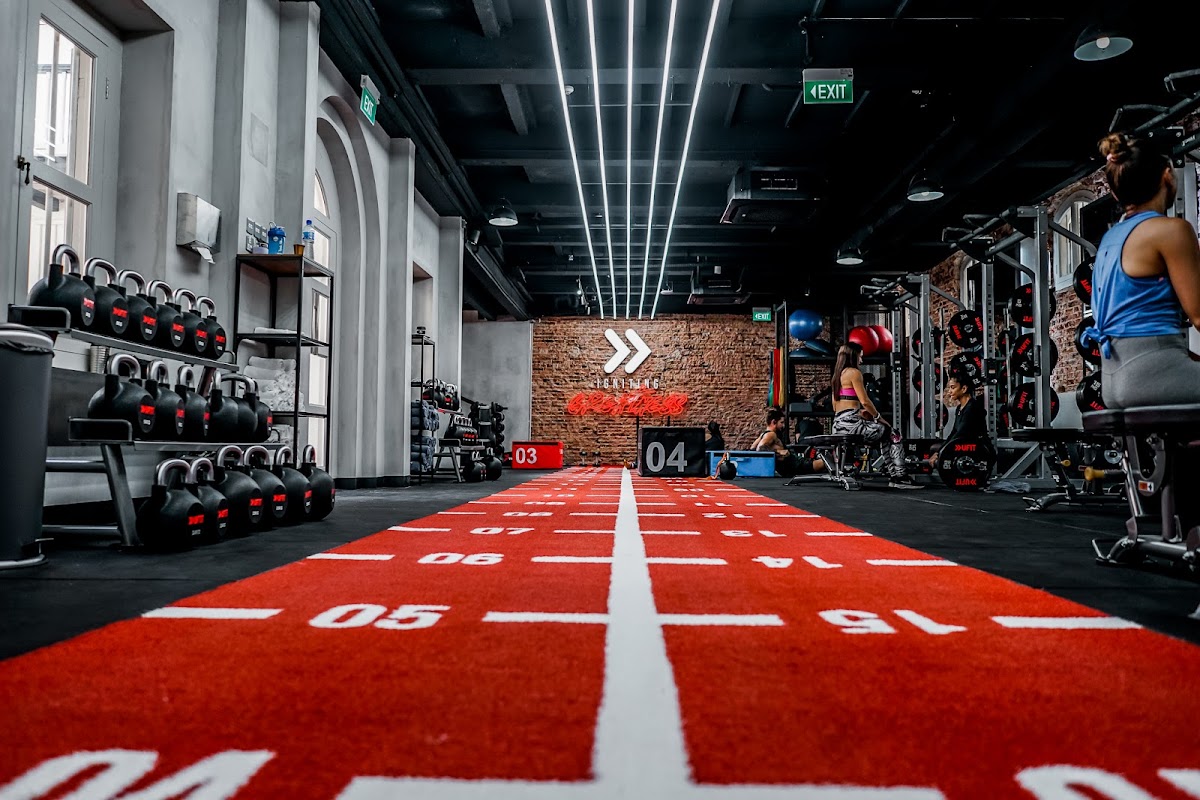
UFIT CBD Hub - Club Street
⭐ 5/5 (477 reviews) • $200-400/mo • Club Street
BEST FOR:
Serious rowers who want professional coaching and competition-grade equipment
NOT IDEAL FOR:
Casual users — the price and intensity level can be intimidating
This is where Singapore's rowing enthusiasts train. Multiple Concept2 Model D rowers, proper technique coaching, and a culture that actually understands the sport. Yes, it's expensive, but the quality is unmatched.
View Details →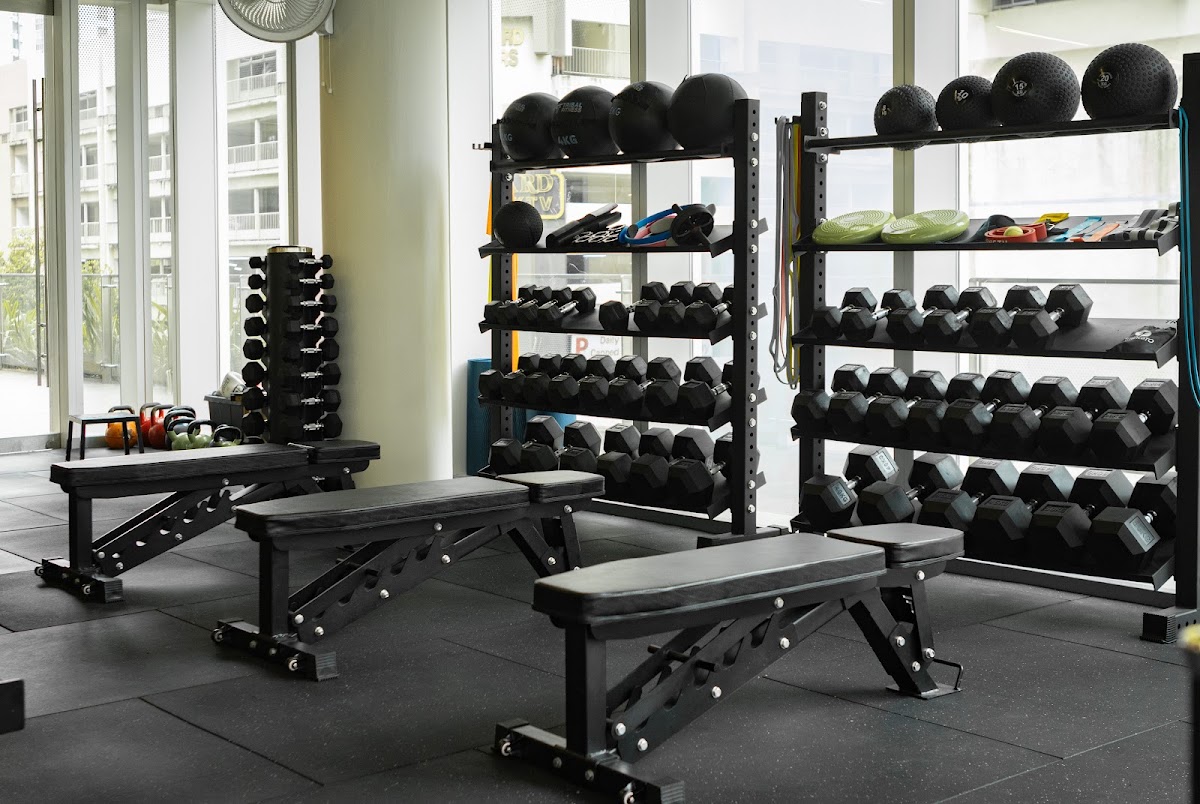
Athletic Collective Orchard
⭐ 5/5 (208 reviews) • Contact for pricing • Claymore Connect
BEST FOR:
CrossFit-style workouts that integrate rowing with strength training
NOT IDEAL FOR:
Pure rowing focus — it's more about functional fitness integration
Their WODs frequently include 500m rowing intervals mixed with burpees and kettlebell swings. The community vibe is strong, and coaches actually teach proper stroke technique during classes.
View Details →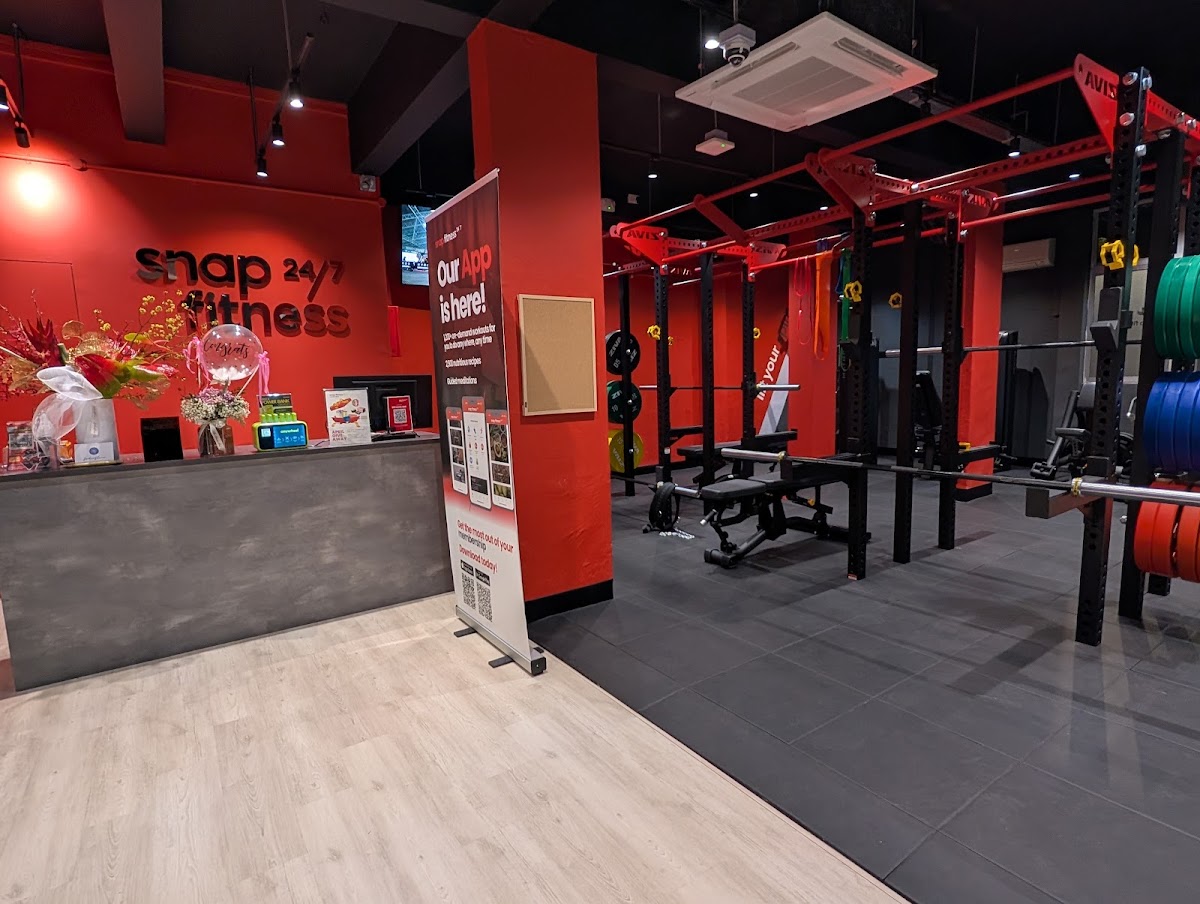
Snap Fitness Jurong West
⭐ 5/5 (203 reviews) • $70-120/mo • Jurong West Ave 1
BEST FOR:
Budget-conscious beginners who want 24-hour access to decent equipment
NOT IDEAL FOR:
Peak hour training — the single Concept2 gets busy between 7-9pm
Great value proposition with one well-maintained Concept2 Model D. Staff doesn't provide technique coaching, but YouTube tutorials work fine once you understand the basics.
View Details →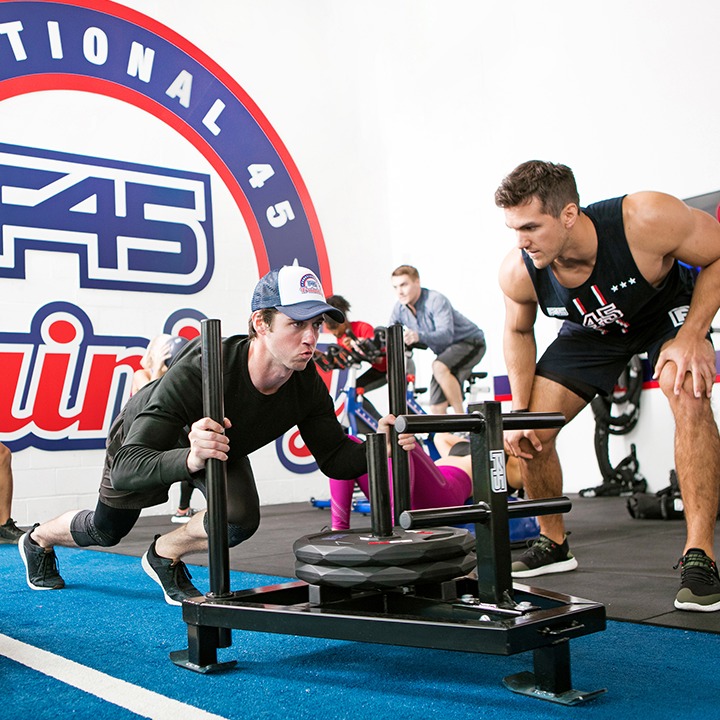
F45 Training Tanjong Rhu
⭐ 5/5 (207 reviews) • $238-316/mo • Stadium Place
BEST FOR:
Group fitness enthusiasts who want structured rowing workouts
NOT IDEAL FOR:
Self-directed training — everything is class-based with set times
Their Tuesday "Romans" workouts are brutal — 4 rounds of 250m rowing followed by strength circuits. Coaches ensure proper form, which is rare in Singapore's group fitness scene.
View Details →ROWING TECHNIQUE: THE FOUR PHASES
Most people grab the handle and start yanking like they're starting a lawnmower. Wrong. Rowing has four distinct phases, and getting them right makes the difference between an effective workout and wasted time.
PHASE 1: THE CATCH
Start position. Knees bent, shins vertical (not angled forward), arms straight, shoulders relaxed. Your knees should be about shoulder-width apart — not pressed together like you're praying. The handle should be at the level of your lower ribs.
Common mistake I see at Snap Fitness Woodlands daily: people lean too far forward, cramming their chest into their knees. This kills power generation and wrecks your back after 10 minutes.
PHASE 2: THE DRIVE
This is where the power happens. Drive with your legs first — not your back, not your arms. Push through your heels like you're doing a leg press. Your torso stays at the same angle until your legs are nearly extended.
Once your legs are 80% extended, lean back slightly (just past vertical) while pulling the handle to your lower chest. Arms come last. It's legs-body-arms, in that exact sequence. Mess up this order and you'll feel it in your lower back by tomorrow morning.
PHASE 3: THE FINISH
Handle touches your lower chest/upper abs, legs fully extended, slight backward lean (maybe 15 degrees past vertical). Hold this position for a split second. Your shoulder blades should be squeezed together like you're trying to hold a pencil between them.
PHASE 4: THE RECOVERY
Reverse the drive sequence: arms first (extend toward the flywheel), then pivot forward at the hips, then bend your knees to return to the catch position. This should take twice as long as the drive phase. Most beginners rush this part, which throws off their rhythm completely.
Breathing: exhale during the drive (power phase), inhale during recovery. Don't hold your breath — I've seen people turn red in the face after 200 meters because they forget to breathe properly.
BEGINNER ROWING WORKOUT PROGRAM
Start here if you've never touched a rowing machine or it's been years since you tried. This progression works whether you're at an ActiveSG gym for $2.50 or Ultimate Performance CBD spending $400/month.
WEEK 1-2: TECHNIQUE BUILDING
SESSION A (3x per week):
- • 5-minute easy pace warm-up (focus on form, not speed)
- • 6 x 1-minute intervals at moderate effort (1-minute rest between)
- • 3-minute cool-down at easy pace
- • Total time: 20 minutes
- • Target stroke rate: 20-22 strokes per minute
Don't worry about power output (watts) yet. Focus entirely on smooth, controlled strokes. If you're gasping for air after one minute, you're going too hard. This should feel like a brisk walk, not a sprint.
WEEK 3-4: BUILDING ENDURANCE
SESSION B (3x per week):
- • 5-minute warm-up
- • 4 x 3-minute intervals at moderate effort (90-second rest between)
- • 5-minute cool-down
- • Total time: 28 minutes
- • Target power: 100-130 watts (if you're tracking)
WEEK 5-6: POWER DEVELOPMENT
SESSION C (3x per week):
- • 8-minute warm-up
- • 3 x 500m intervals at hard effort (3-minute rest between)
- • 5-minute cool-down
- • Total time: 30-35 minutes
- • Target pace: Sub-2:15 per 500m (adjust based on fitness)
By week 6, you should be comfortable with the movement pattern and ready to push harder. This is when rowing gets addictive — you'll start chasing better split times and higher power outputs.
INTERMEDIATE TRAINING PROTOCOLS
Once you can comfortably row 2000m without stopping, these workouts will take your fitness to the next level. I use these at Pulse Lab when I want to mix things up from the usual strength training routine.
THE SINGAPORE SPECIAL (HIGH INTENSITY)
- • 10-minute warm-up at easy pace
- • 8 x 250m at 90% effort (90-second rest between)
- • 5-minute active recovery
- • 4 x 500m at 85% effort (2-minute rest between)
- • 10-minute cool-down
Named for Singapore's stop-start traffic — short bursts of high intensity with recovery periods.
PYRAMID POWER
- • 10-minute warm-up
- • 250m, 500m, 750m, 1000m, 750m, 500m, 250m
- • Rest = half the time it took to complete each interval
- • 10-minute cool-down
This one's a mental game as much as physical. The 1000m piece in the middle separates the serious from the casual.
STEADY STATE ENDURANCE
- • 5-minute warm-up
- • 20-30 minutes at 70-75% max heart rate
- • Target pace: Conversational (you could chat if needed)
- • 5-minute cool-down
Boring but effective. This builds the aerobic base that lets you crush those high-intensity sessions.
Mix these workouts throughout your week. Monday might be pyramid power, Wednesday could be steady state, Friday hits the Singapore Special. Your body adapts quickly to rowing, so variety prevents plateaus.
EQUIPMENT AND SETTINGS
The Concept2 Model D is the gold standard — it's what you'll find at 90% of quality gyms in Singapore. Here's how to set it up properly, because the default settings are garbage for most people.
DAMPER SETTING (THE DIAL ON THE SIDE)
This isn't resistance — it controls airflow to the flywheel. Think of it like gears on a bike. Higher numbers (8-10) feel like rowing through thick mud. Lower numbers (1-3) feel like there's no resistance at all.
Sweet spot for most people: 4-6. I use 5 at UBX Novena, which gives good resistance without making each stroke feel like I'm dragging a car. Bigger, stronger people might prefer 6-7. Smaller frames should stick to 3-5.
FOOT PLACEMENT
The strap should go across the widest part of your foot, just below the ball. Not across your toes, not across your arch. Tighten it so your heel can come up slightly during the recovery phase but your foot doesn't lift off the plate entirely.
MONITOR SETUP
Key metrics to track:
- Split time: Time to complete 500m at current pace (most important number)
- Stroke rate: Strokes per minute (aim for 20-28 for most workouts)
- Watts: Power output (higher = working harder)
- Distance: How far you've "traveled"
Ignore calories burned — it's wildly inaccurate. Focus on split time for pacing and watts for power output. A 2:00 split means you're rowing at a pace that would complete 2000m in 8 minutes.
COMPARISON TABLE
| Gym | Price | Rating | Rowing Setup |
|---|---|---|---|
| UFIT CBD Hub | $200-400/mo | 5/5 | Multiple Concept2s + coaching |
| Athletic Collective | Contact | 5/5 | Integrated WOD training |
| Snap Fitness JW | $70-120/mo | 5/5 | Single Concept2 Model D |
| F45 Tanjong Rhu | $238-316/mo | 5/5 | Class-based coaching |
| Snap Fitness WL | $70-120/mo | 5/5 | Single rower, 24-hour access |
| U-Elite Martial | Contact | 5/5 | Combat sports integration |
HOW TO CHOOSE YOUR ROWING GYM
IF YOU'RE A: Complete Beginner
Look for: technique coaching, no judgment atmosphere, equipment variety for cross-training
Best fit: F45 Tanjong Rhu ($238-316/mo)
IF YOU'RE A: Serious Athlete
Look for: multiple machines, competitive environment, professional coaching, performance tracking
Best fit: UFIT CBD Hub ($200-400/mo)
IF YOU'RE: Budget-Conscious
Look for: 24-hour access, reliable equipment, minimal contracts, day pass options
Best fit: Snap Fitness Jurong West ($70-120/mo)
IF YOU'RE: Time-Limited Professional
Look for: CBD location, off-peak availability, shower facilities, quick workout options
Best fit: Ultimate Performance CBD (Contact for pricing)
SINGAPORE ROWING INSIDER TIPS
BEAT THE PEAK HOUR CRUSH
Prime time is 7-9pm weekdays when every office worker descends on Singapore gyms. But here's the thing — most people ignore rowing machines even during peak hours. While there's a queue for treadmills, the Concept2 sits empty.
Best rowing times: 6:30am (before the morning rush), 2-4pm (perfect if you work flexible hours), or 9:30pm onwards. At Snap Fitness Woodlands, I've never waited for the rower, even during Chinese New Year gym resolution season.
HUMIDITY HYDRATION STRATEGY
Singapore's humidity hits different when you're rowing hard. You'll sweat more than you expect, even in air-conditioned gyms. Bring a towel (mandatory at most places anyway) and a water bottle with electrolytes.
Pro tip: Pocari Sweat or 100PLUS work better than plain water for sessions over 30 minutes. I learned this the hard way after a 45-minute steady-state session left me dizzy for an hour.
EQUIPMENT SUBSTITUTIONS
Not all Singapore gyms have Concept2 rowers (the gold standard). Some budget chains use cheaper brands that feel different. The technique stays the same, but the resistance curve and monitor might vary.
If your gym only has water rowers or magnetic resistance models, focus on time-based intervals instead of distance. A 2-minute hard effort is a 2-minute hard effort, regardless of the machine type.
RECOVERY GEAR THAT ACTUALLY WORKS
Rowing hits your posterior chain hard — lats, rhomboids, glutes, hamstrings. After intense sessions, invest in recovery tools. A 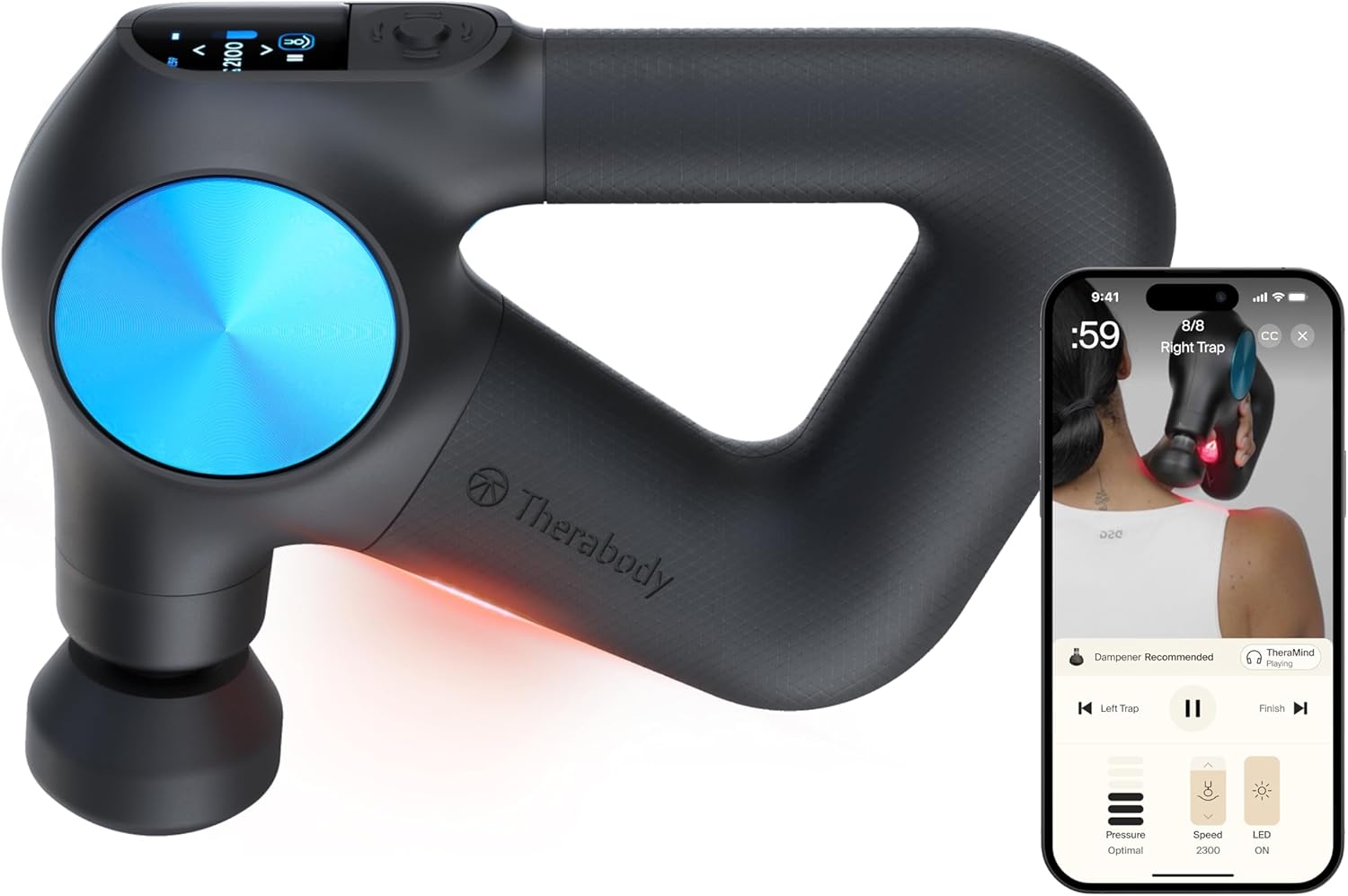 Theragun PRO massage gun makes a huge difference for lat and glute recovery.
For home recovery between gym sessions, Concept2 Model D rower is the ultimate investment. Same machine you use at premium gyms, fits in most Singapore HDB spare rooms when folded upright.
NUTRITION TIMING
Don't row on a full stomach. Singapore's hawker food culture means we often eat large meals, but rowing with laksa or chicken rice sloshing around is miserable. Wait 2-3 hours after big meals, or stick to light snacks (banana, energy bar) 30-60 minutes before rowing.
COMMON SINGAPORE ROWING MISTAKES
THE "YAM CHA" ROWING STYLE
I see this constantly — people treating the rower like a casual conversation spot. They set the damper to 10, row at 30+ strokes per minute for 2 minutes, then stop to chat. This isn't effective training; it's just moving around.
Fix it: Lower the damper setting, focus on longer steady efforts, and save the socializing for after your workout. Rowing requires concentration to be effective.
THE "HUNCHBACK" POSITION
Singapore's desk job culture creates rounded shoulders and forward head posture. People carry this into rowing, hunching over the handle like they're typing on a keyboard.
Fix it: Chest up, shoulders back and down, long spine throughout the stroke. Pretend you're trying to show off your company logo on your gym shirt. This also prevents the lower back pain that plagues office workers who row with poor posture.
THE "JACK RABBIT" RECOVERY
Rushing back to the catch position like you're late for a meeting. The recovery should be slow and controlled — twice as long as the drive phase. When I see people racing through this at Fitness Station Toa Payoh, I know they're missing the point entirely.
Fix it: Count "one-thousand-one, one-thousand-two" during recovery vs "one" during the drive. This rhythm prevents early fatigue and maintains good form.
FREQUENTLY ASKED QUESTIONS
How often should I row per week?
Start with 2-3 sessions per week as a beginner. Once comfortable, you can row daily if you vary intensity — alternate hard days with easy recovery rows. I row 4-5 times per week: two high-intensity sessions, two moderate efforts, one easy recovery. Just like other cardio, your body needs time to adapt and recover.
What's a good beginner pace for 2000m?
Aim for 2:20-2:40 split time (9:20-10:40 total) for your first 2000m. Don't worry about being "slow" — everyone starts somewhere. Focus on completing the distance with good form rather than chasing speed. After 6-8 weeks of consistent training, you should see significant improvement in both pace and technique.
Which muscles does rowing work?
Rowing is 60% legs, 20% core, 20% arms/back. You'll feel it in your quadriceps, glutes, hamstrings, lats, rhomboids, rear delts, and core. It's one of the few exercises that works your entire posterior chain while providing serious cardiovascular training. This is why proper form matters — poor technique shifts load to smaller muscle groups and causes early fatigue.
Should I row before or after weight training?
Depends on your goal. For warm-up, 5-10 minutes of easy rowing before lifting activates your entire body. For serious rowing workouts, do them on separate days or after lifting (if you have energy left). At Pulse Lab, I often see people crushing their legs with squats then trying to row hard — doesn't work well.
Why does my back hurt after rowing?
Usually form issues. You're either rounding your back, pulling too early with your arms, or using too high a damper setting. Check that you're driving with legs first, maintaining a straight back, and not yanking the handle. If pain persists, get your technique checked by a trainer at places like UFIT CBD Hub where they actually understand rowing mechanics.
Can I lose weight just by rowing?
Rowing burns serious calories — 400-600+
Related Guides
How to Squat Properly: Singapore Guide
How to Squat Properly: Singapore Guide. Expert Singapore fitness guide with actionable advice, local tips, and
How to Deadlift Properly: Singapore Guide
How to Deadlift Properly: Singapore Guide. Expert Singapore fitness guide with actionable advice, local tips,
How to Bench Press Properly: Singapore Guide
How to Bench Press Properly: Singapore Guide. Expert Singapore fitness guide with actionable advice, local tip
How to Do Push-Ups Properly: Singapore Guide
How to Do Push-Ups Properly: Singapore Guide. Expert Singapore fitness guide with actionable advice, local tip