
Fabric vs Rubber Resistance Bands Singapore
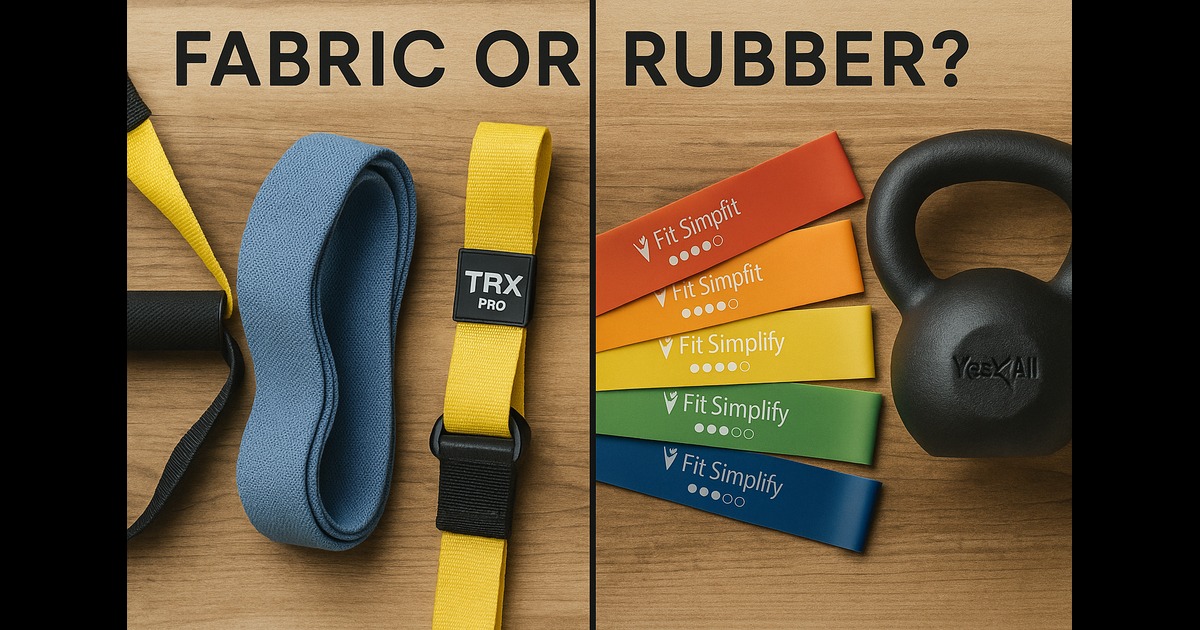
Fabric vs rubber resistance bands for Singapore: which lasts longer in 80% humidity, which costs less per year, and which one actually replaces a weight rack for HDB lifters.
As an Amazon Associate, Gyms.sg earns from qualifying purchases. Links here, including to our partner brand OnWhey, may earn us a commission at no extra cost to you.
QUICK ANSWER: FABRIC VS RUBBER RESISTANCE BANDS SINGAPORE
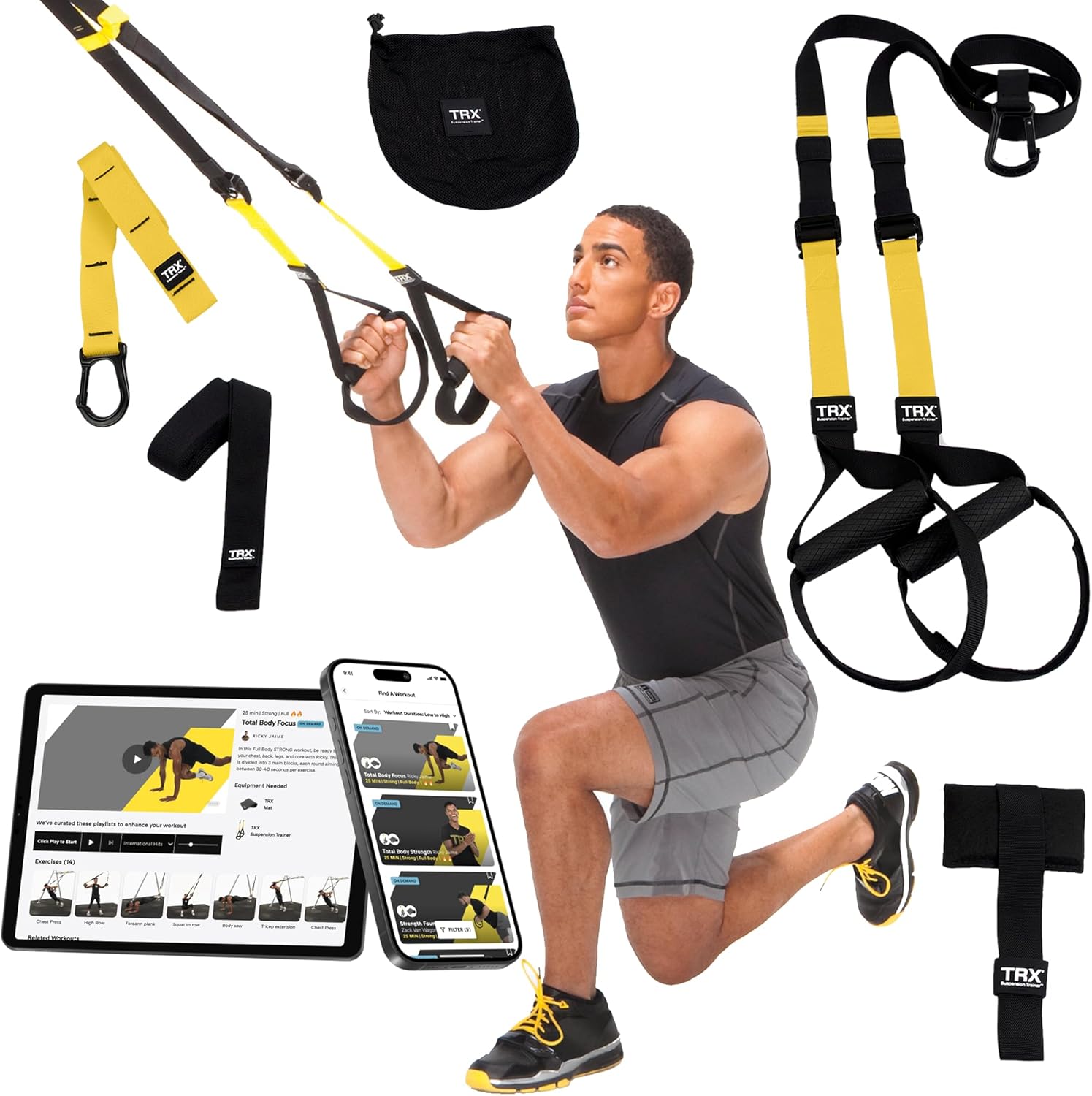
Honest 2026 read: the resistance band category on Amazon.sg is mostly third-party drop-shippers with patchy stock — fabric or rubber, the listings flicker. The best path for Singapore home trainers is the TRX PRO3 (variable resistance via body angle, no snap risk), paired with Bowflex SelectTech 552 dumbbells for graded loading and a Theragun Prime for recovery. For pure rubber/fabric bands themselves, Decathlon in-store is the more reliable channel.
Listed prices were scraped from Amazon.sg on 2026-05-02 and may have changed — the buyer always sees the current price on the linked product page after click.
THE REAL TALK: WHY I SPENT $200 TESTING BANDS
I've broken more resistance bands than I care to admit. Started with those cheap rubber tubes from Popular Bookstore (snapped during my second workout), graduated to expensive fabric loops, then back to medical-grade latex. Three years and way too much money later, here's what actually matters in Singapore's climate.
The big question isn't really fabric versus rubber — it's what you're using them for and how often you'll replace them. That Undersun Fitness fabric set I bought last year? Still going strong despite daily use. The TheraBand latex bands from my physio days? Also fine after 18 months, though they've stretched out a bit.
But that Bodylastics Max Tension set with the door anchor? Game-changer for home workouts during circuit breaker. A handful of premium Singapore gyms run dedicated resistance-band classes, but most gyms expect you to bring your own if you want to use them.
FABRIC BANDS: THE PREMIUM CHOICE
Fabric bands feel completely different from rubber. The material doesn't dig into your skin, won't snap back and whip you (learned that the hard way with cheap tubes), and maintains consistent resistance throughout the range of motion. In Singapore's humidity, they handle sweat better — rubber gets slippery, fabric stays grippy.
The downsides? Cost and cleaning. Quality fabric bands like the Mark Bell Hip Circle cost 2-3x more than equivalent resistance rubber bands. They also absorb sweat and need proper washing — something to consider if you're using them in high-intensity HIIT or F45-style classes.
RUBBER BANDS: THE PRACTICAL WORKHORSE
Rubber bands are the reliable choice. Medical-grade latex from brands like TheraBand has been around for decades because it works. They're easier to clean (just wipe down), cost less to replace, and offer predictable resistance curves.
The biggest advantage? Versatility. You can get rubber bands in every resistance level imaginable, from physio-light to bodybuilder-heavy. That Black Diamond resistance band set can literally replace a full weight room for most exercises — perfect for HDB living where space is premium.
The catch? They will eventually fail. Latex degrades over time, especially with Singapore's UV exposure if you're working out outdoors. I've had bands snap mid-exercise (thankfully never during something dangerous), and it's always without warning. Check them regularly for nicks or thin spots.
THE SINGAPORE CLIMATE FACTOR
Singapore's weather affects resistance bands more than most people realize. Rubber deteriorates faster in constant heat and humidity — that $20 set you bought might last 18 months instead of 3 years in a temperate climate.
Fabric bands handle the humidity better but have their own issues. They absorb sweat like crazy, and if you don't wash them properly, they'll start smelling like a forgotten gym towel. I learned this the hard way after using mine for outdoor workouts at East Coast Park for a month straight.
Storage matters too. Never leave bands in your car or anywhere that gets direct sunlight. I killed a perfectly good set of Rogue Monster Bands by leaving them in my gym bag in the car boot for a week during a particularly hot spell.
For our climate, look for bands with anti-microbial treatments or those made from materials that resist mold and bacteria. It's worth paying a bit more for bands that won't become a hygiene nightmare after a few months of regular use.
BAND COMPARISON TABLE
| Type | Price Range | Durability | Comfort | Singapore Rating |
|---|---|---|---|---|
| Fabric Loop Bands | $25-65 | Excellent | Outstanding | 4.5/5 |
| Latex Tube Bands | $15-35 | Good | Fair | 4.0/5 |
| Flat Rubber Bands | $12-25 | Excellent | Good | 4.2/5 |
| Mini Loop Bands | $8-20 | Fair | Good | 3.8/5 |
| Power Bands (Heavy) | $35-85 | Outstanding | Fair | 4.3/5 |
| Cheap Generic Tubes | $5-15 | Poor | Poor | 2.5/5 |
HOW TO CHOOSE YOUR RESISTANCE BANDS
IF YOU'RE A: Complete Beginner
Look for: light resistance, comfortable grip, instructional materials, affordable price point
Best fit: TheraBand Light Set
IF YOU'RE A: Serious Athlete
Look for: heavy resistance, multiple attachment points, professional grade materials, warranty
Best fit: Rogue Monster Bands
IF YOU'RE: Budget-Conscious
Look for: basic rubber tubes, proven durability, local availability, replacement parts
Best fit: Decathlon Domyos Set
IF YOU'RE: Home Gym Builder
Look for: complete system, door anchors, multiple resistances, space-efficient storage
Best fit: Bodylastics Max Tension
RESISTANCE LEVELS EXPLAINED
Understanding resistance levels is crucial because manufacturers use different systems. Some use weight equivalents (15lb, 25lb, 40lb), others use colors, and some just say "light, medium, heavy." It's confusing until you realize it's all relative anyway.
A "heavy" band from one brand might feel like a "medium" from another. The resistance also changes dramatically based on how much you stretch the band. That 40lb band only hits 40lb resistance at full extension — at half stretch, it might only be 20lb.
Here's what I've found works: start lighter than you think you need. Bands feel different from weights. That movement that's easy with 20kg dumbbells might humble you with a "medium" resistance band because the resistance curve is completely different.
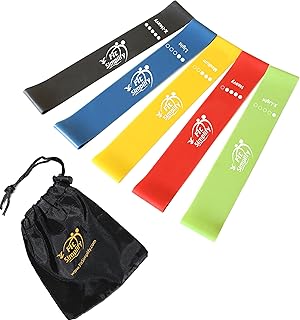
For Singapore gym-goers, I recommend getting a set with at least 3 resistance levels. You'll use different resistances for different muscle groups and exercises. The Fit Simplify 5-band set is perfect for testing what resistances you prefer before investing in premium bands.
EXERCISES THAT WORK BETTER WITH BANDS
Some exercises just work better with bands than weights. Lateral walks with mini loops are incredibly effective for glute activation — way better than trying to do them with ankle weights. Face pulls with bands give you that perfect resistance curve that's hard to replicate with cables.
Chest flies with bands feel more natural than dumbbell flies because the resistance increases as you stretch the band, matching your muscle's strength curve better. Your chest is strongest in the middle of the range of motion, which is exactly where band resistance peaks.
For pull-up assistance, bands are game-changers. Much better than the assisted pull-up machines at most chain gyms because bands teach you the actual movement pattern. The heavy-duty pull-up bands can take 30-50kg off your bodyweight.
Band-resisted squats and deadlifts add accommodating resistance — the resistance increases as you get stronger through the range of motion. It's a powerlifting technique that translates well to regular training. Check out our squatting guide for more details on proper form with added resistance.
SINGAPORE AVAILABILITY AND WHERE TO BUY
Amazon Singapore has the best selection and pricing for quality bands. Shopee and Lazada have cheaper options but quality varies wildly. I've had good luck with some Shopee sellers, but I've also received bands that snapped on the first use.
Physical stores: Decathlon has a decent budget selection in their Domyos line. Royal Sporting House sometimes stocks TheraBand products. Popular Bookstore has basic bands but they're pretty cheap quality — fine for trying bands out but not for long-term use.
For premium bands, Amazon is your best bet. Shipping is fast, returns are hassle-free if you get a defective product, and the prices are competitive with overseas retailers. The Power Systems VersaTubes I ordered arrived in 2 days and came with a proper instruction manual.
Pro tip: if you're buying expensive bands ($40+), check if the manufacturer offers international warranty. Some brands like Rogue and EliteFTS will replace defective bands even if you bought them through Amazon Singapore.
INSIDER TIPS FROM 3 YEARS OF BAND TRAINING
Tip 1: Pre-stretch new rubber bands. Don't go full intensity on day one. Stretch them gently to about 80% of their range a few times before your first workout. This prevents sudden failure during exercise. I learned this after a band snapped mid-bicep curl and whipped me in the face.
Tip 2: Rotate your bands regularly. If you use bands daily, have at least two sets so each gets recovery time. Latex needs time to return to its original state between sessions. Using the same band daily accelerates wear.
Tip 3: Check anchor points obsessively. Most band accidents happen because of anchor point failure, not band failure. Door anchors need to be positioned correctly — too high or too low and they can slip out. I prefer using the pull-up bars at parks like those near East Coast beach for heavy band work.
Tip 4: Bring alcohol wipes. If you're using bands at public gyms or outdoor spaces, wipe them down before and after use. Bands pick up bacteria easily, and Singapore's climate is perfect for growing nasties. Those small alcohol wipe packs from Guardian are perfect for this.
Tip 5: Learn to combine bands with weights. The most effective workouts combine both. Use bands for activation exercises before your main lifts, or add band resistance to barbell movements. Many gyms like those covered in our pricing guide allow you to bring your own bands even if they don't provide them.
MAINTENANCE AND LONGEVITY
Proper care extends band life significantly. Rinse fabric bands with cool water after sweaty sessions and let them air dry completely. Never put them in the dryer — the heat will damage the elastic fibers. For rubber bands, a quick wipe with a damp cloth is usually sufficient.
Storage matters more than most people realize. Bands should be stored at room temperature, away from direct sunlight, and preferably not under tension. Don't leave them stretched around objects for extended periods. I use a small mesh bag to keep all my bands organized and protected.
Check for wear regularly. Look for small nicks, thin spots, or discoloration in rubber bands. Fabric bands might develop fraying at stress points or loose stitching. Replace bands at the first sign of significant wear — the cost of replacement is much less than a potential injury from band failure.
Temperature extremes accelerate aging. Don't store bands in your car, near air conditioning units, or anywhere that experiences big temperature swings. Singapore's consistent temperature is actually good for band longevity compared to places with seasonal extremes.
FREQUENTLY ASKED QUESTIONS
Do fabric bands really last longer than rubber bands?
In my experience, yes, but it depends on usage. Quality fabric bands like Undersun Fitness bands have outlasted multiple sets of rubber bands. However, cheap fabric bands are worse than good rubber bands. The key is getting proper fabric bands with reinforced stitching, not generic fabric-covered rubber tubes.
Can resistance bands replace weights entirely?
For most people, yes. A complete band system like the Bodylastics Max Tension set can provide equivalent resistance to a full gym. The limitation is progressive overload — it's harder to make precise strength increases with bands compared to adding 2.5kg plates to a barbell. But for general fitness, muscle building, and strength maintenance, bands are completely sufficient.
Which resistance level should I start with?
Start with light to medium resistance, regardless of your strength level. Bands feel completely different from weights. I'm comfortable deadlifting 140kg but still use light bands for some exercises. Get a set with multiple resistances like the Fit Simplify 5-band set to discover your preferences before investing in individual bands.
Are bands safe for heavy exercises like deadlifts and squats?
Yes, but technique is crucial. Heavy-duty bands like Rogue Monster Bands can handle serious resistance. The key is proper anchoring and controlled movements. I regularly do band-assisted deadlifts and squats, but I always check the anchor point and inspect the bands before each session. Start light and progress gradually — band-assisted squats can actually be more challenging than bodyweight squats.
How do I prevent bands from rolling up during exercises?
This is mainly an issue with cheap mini loop bands. Quality fabric bands like the Mark Bell Hip Circle are designed to stay flat. For budget bands, try positioning them slightly higher or lower on your legs, ensure they're not too tight when relaxed, and consider wearing them over leggings instead of bare skin. Sometimes it's just a sign that you need better bands.
Related Guides
Best Resistance Bands Singapore 2026
The resistance bands worth buying on Amazon SG in 2026 — loop, tube, and fabric sets ranked on tension accurac
Pull Up Assist Bands Singapore Review
Pull-up assist bands honest review for Singapore — which resistance levels actually progress beginners to a st
Home Gym Barbell Set Singapore
Home gym barbell set guide for Singapore — Olympic vs standard, which set actually survives HDB humidity, and
Ab Roller Wheel Review Singapore
Honest review of the ab roller wheel for Singapore home workouts — which models actually survive HDB humidity,