
Peloton Alternatives in Singapore (2026)
Peloton has no official store here, and its bike is locked to a US$49.99 monthly membership. The smarter path costs less than half as much: the Peloton App on your own tablet, propped on a Schwinn 700IC spin bike.
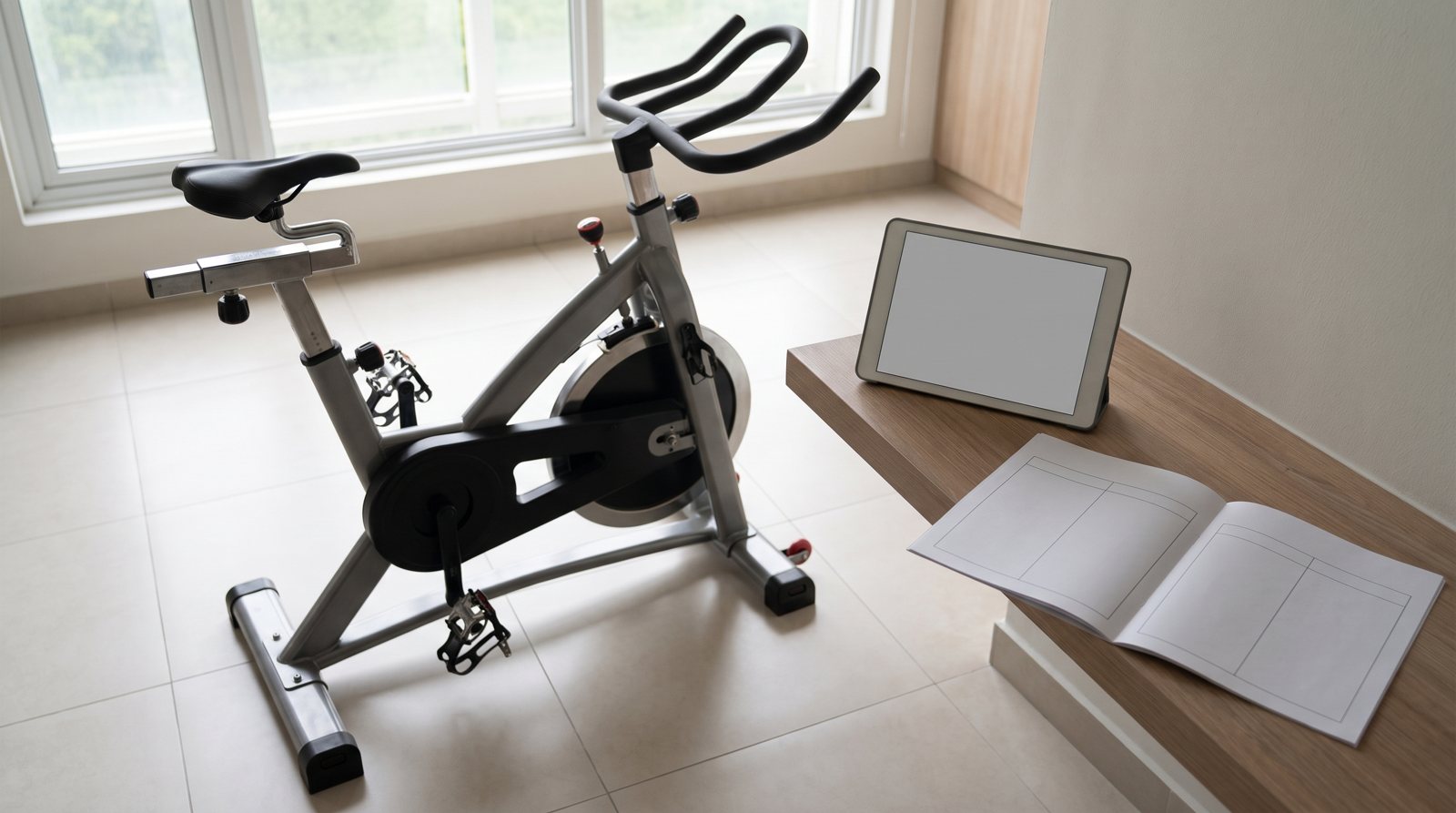
For a class-led home cycling setup, choose the bike and the class service separately. Confirm that the app is supported for your account and region, which plan includes the classes you want, and whether the bike fits your room and body. This guide does not establish a single in-stock choice or current subscription price.
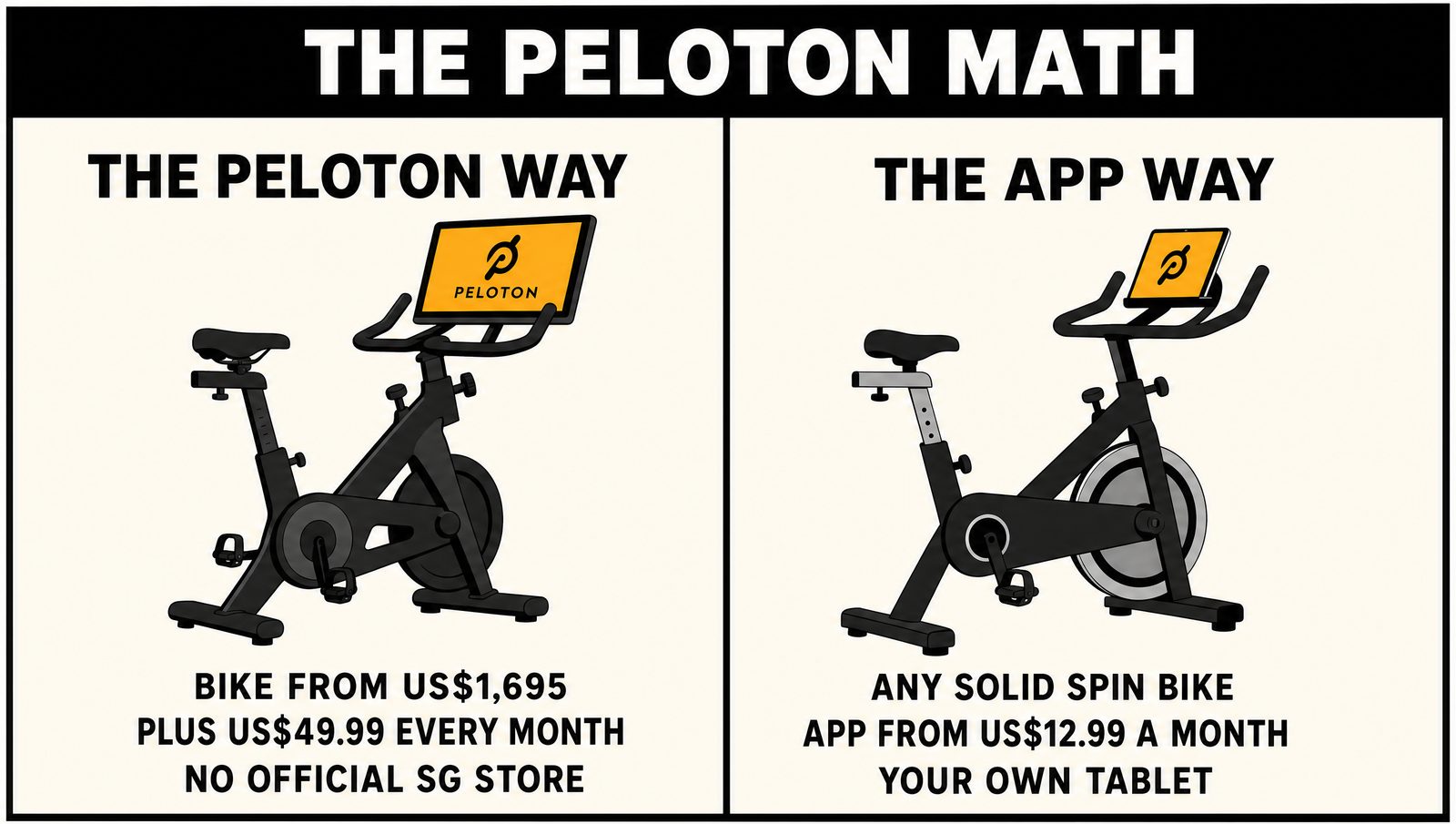
The decision in one picture: Peloton sells you a screen bolted to a bike and a big subscription. The app path buys the bike and the classes separately, for far less.
Compare first-year and ongoing costs using current equipment quotes and subscription terms. Include any tablet, sensors, delivery and maintenance the setup requires; the saving depends on the exact packages you compare.
And if what pulled you toward Peloton was really the short, brutal, coached workout rather than cycling itself, there's a second path worth knowing about: the Bowflex Max Trainer SEi, a stepper-elliptical hybrid built around 14-minute interval sessions. More on both below.
What does Peloton actually cost in 2026?
Before importing a Peloton, confirm current hardware pricing, supported region, subscription requirements, delivery and warranty arrangements directly with the provider. Do not use an older US price as a Singapore delivered quote.
Check the current app plan's class limits, device compatibility and sensor support before subscribing. A bike that holds a tablet does not automatically connect to the app or provide the same features as integrated hardware.
Every option at a glance
| Path | Hardware | Monthly | Who it fits |
|---|---|---|---|
| Schwinn 700IC + Peloton App | Check the exact bike and delivered quote | Check the current supported app plan | Most people |
| Bowflex Max Trainer SEi | Check the selected model and delivered quote | Optional (JRNY) | Intervals, not cycling |
| Bowflex Max Trainer M8 | Check the selected model and delivered quote | Optional (JRNY) | Skip, see below |
| Peloton Bike, imported | Confirm hardware price, import and delivery terms | Confirm required subscription and regional terms | Leaderboard devotees |
Schwinn 700IC: the bike for the app plan
For the Schwinn 700IC, confirm the exact model documentation, adjustment range, rider limits and tablet-holder arrangement before buying. Check how resistance is adjusted and which measurements the console provides; do not infer app connectivity from the presence of a screen holder.
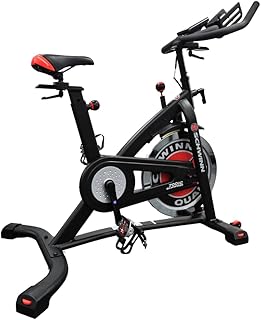
The 18.1kg flywheel and belt drive are the class-following essentials; the media rack holds the tablet that replaces Peloton's screen. Image from the Amazon listing.
Check the selected bike's resistance mechanism, console connectivity and sensor compatibility against the class service you plan to use. Include any required accessories in the quote and ask the seller about maintenance and warranty support.
Compare the complete bike, accessories and subscription package before deciding whether it costs less than another route. Replacement-part availability and maintenance costs should be checked for the exact model. Related reading: spin bike roundup; Adidas C-21X review.
Bowflex Max Trainer SEi: the no-bike alternative
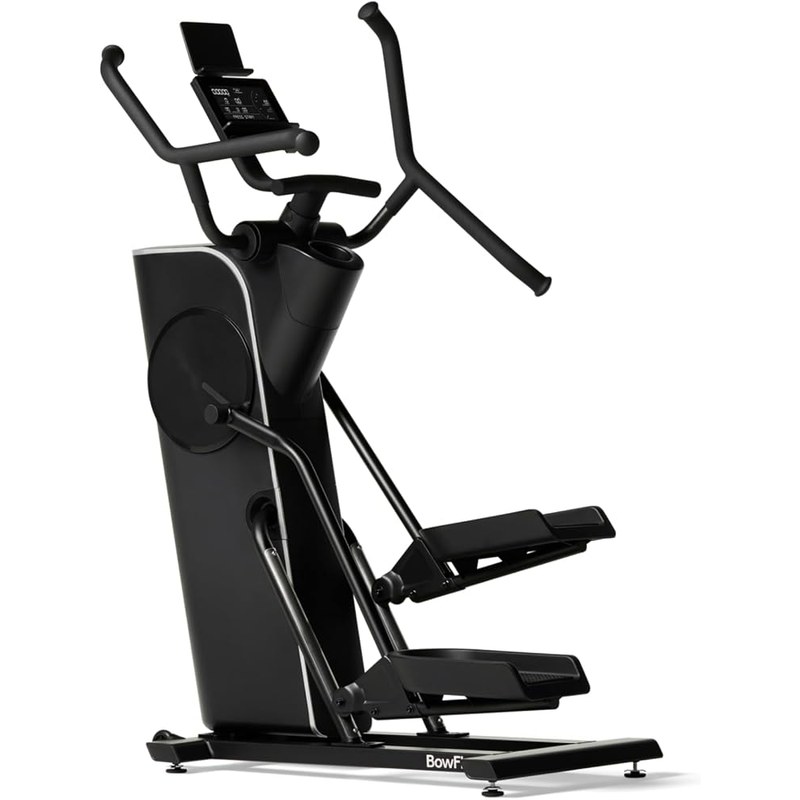
A stepper-elliptical hybrid on a 119 by 78cm footprint; resistance is 16 magnetic levels. Image from the Amazon listing.
The BowFlex Max Trainer SEi is a different equipment format from a spin bike. Confirm its current manual, resistance settings, built-in workouts and subscription-dependent features before comparing it with a cycling setup.
Know what you're buying, though. The console is a 7-inch LCD, not a touchscreen, so classes run on your own tablet here too. CNN Underscored's reviewer found it less planted-feeling than a full-size elliptical, worth weighing if you're near the 136kg rating, and it's a 65kg machine that doesn't fold, so it keeps its floor space permanently. It launched in late 2023 and is Bowflex's current-production model, which matters for the next entry. If a classic elliptical suits you better, our elliptical setup guide makes that case.
The one we'd skip
For a Max Trainer M8, verify the exact generation, condition, current service support and warranty. Compare the complete offer with an SEi or another model without assuming a fixed price gap or automatic successor relationship.
Or get the class from an actual studio
Compare a home setup with current studio or gym access using the sessions you would realistically attend. Confirm that the facility offers the equipment or classes you want, then include its current contract and booking terms in the decision.
Common questions
Can you use the Peloton app without a Peloton bike?
What's the best Peloton alternative for most people?
Is Peloton officially available in Singapore?
What should a spin bike have to work with the Peloton app?
Is the Bowflex Max Trainer worth it compared to a spin bike?
Updated 22 September 2026: removed historical price and subscription comparisons as current buying advice. Verify present provider terms and the exact seller offer before purchasing.
Related reading: Absolute You Millenia Walk; Anytime Fitness City Square Mall; Fitness First Westgate.