
Manduka PRO Yoga Mat Review Singapore (2026)
OutdoorGearLab's Manduka PRO test units were still serviceable at ten and nearly twenty years old, while budget mats fade in one to two. At S$168.21 it's the buy for a regular home practice, with two honest exceptions.
Buying through the Amazon links in this guide costs you nothing extra. We earn a small commission, which keeps Gyms.sg free and pays for guides like this one. As an Amazon Associate, Gyms.sg earns from qualifying purchases. OnWhey is our own supplement brand.
Buy the Manduka PRO if you practise at home a few times a week and you're tired of replacing mats. When OutdoorGearLab ranked it first of the 19 mats they tested, the detail that mattered was the age of their test units: three, five, ten and nearly twenty years old, all still serviceable. A S$30 to S$50 TPE mat typically compresses and loses grip within one to two years, so over a decade of regular practice you'd buy five or more of them, and the PRO at S$168.21 quietly becomes the cheaper mat. Skip it if your practice is mostly hot yoga, or if the mat has to travel with you. Both reasons are below.
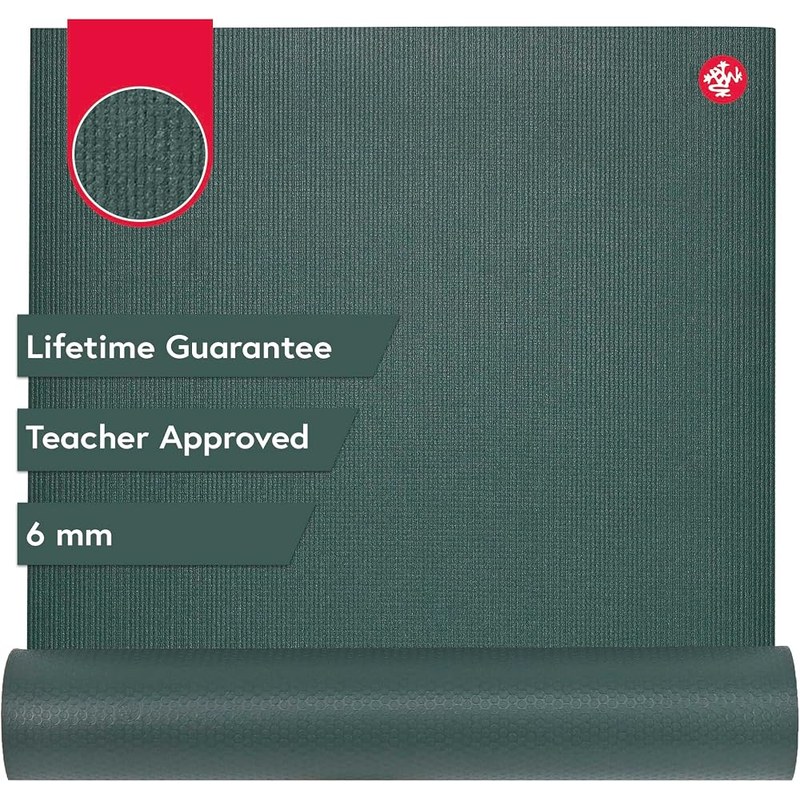
6mm thick, 180 by 66cm, 3.4kg, made in Germany. The listing pools a 4.6-star rating across 8,400+ reviews of the PRO family. Image from the Amazon listing.
Who it's for, who should pass
The Manduka PRO fits a specific practice: regular sessions on a mat that stays where it is, at home or left at one studio. The 6mm density is the draw here. Kneeling poses stop hurting, standing balances stay stable because the foam is dense rather than squashy, and the closed-cell surface doesn't absorb sweat, so wiping it down after practice actually cleans it instead of pushing moisture into the foam.
Pass on it if you carry your mat across town, because 3.4kg on a shoulder strap is a commitment you'll feel by the third block, roughly double what most TPE mats weigh. And think twice if your weekly practice is hot yoga: the same closed-cell surface that makes it hygienic leaves sweat pooling on top, and OutdoorGearLab found it more slippery when wet than absorbent-top mats. Manduka's own answer for heated classes is to lay a grippy towel over it, which works but adds S$50 or more to the real cost.
What the specs mean on the floor
The standard PRO is 6mm thick with a firm PVC construction. Compare that density and the mat’s weight with how you will transport and use it. Thickness alone does not guarantee comfort or balance for every person.
A closed-cell surface means sweat stays on top. Nothing soaks in, so the mat wipes clean in thirty seconds and doesn't develop the smell that open-cell foam mats pick up after a few months. Manduka certifies the material STANDARD 100 by OEKO-TEX, it's latex-free, and the whole mat is made in Germany. The same property is its hot-yoga weakness, covered below.
The 180 by 66cm footprint is the standard size, not the tall size. If you're over about 1.8m, your head or heels will find the floor in reclined poses; Manduka sells an 85-inch version of the same mat for that problem. Check the size selector on the listing before you pay, because the colour variants and both lengths live on one Amazon page.
Flaws, but not dealbreakers
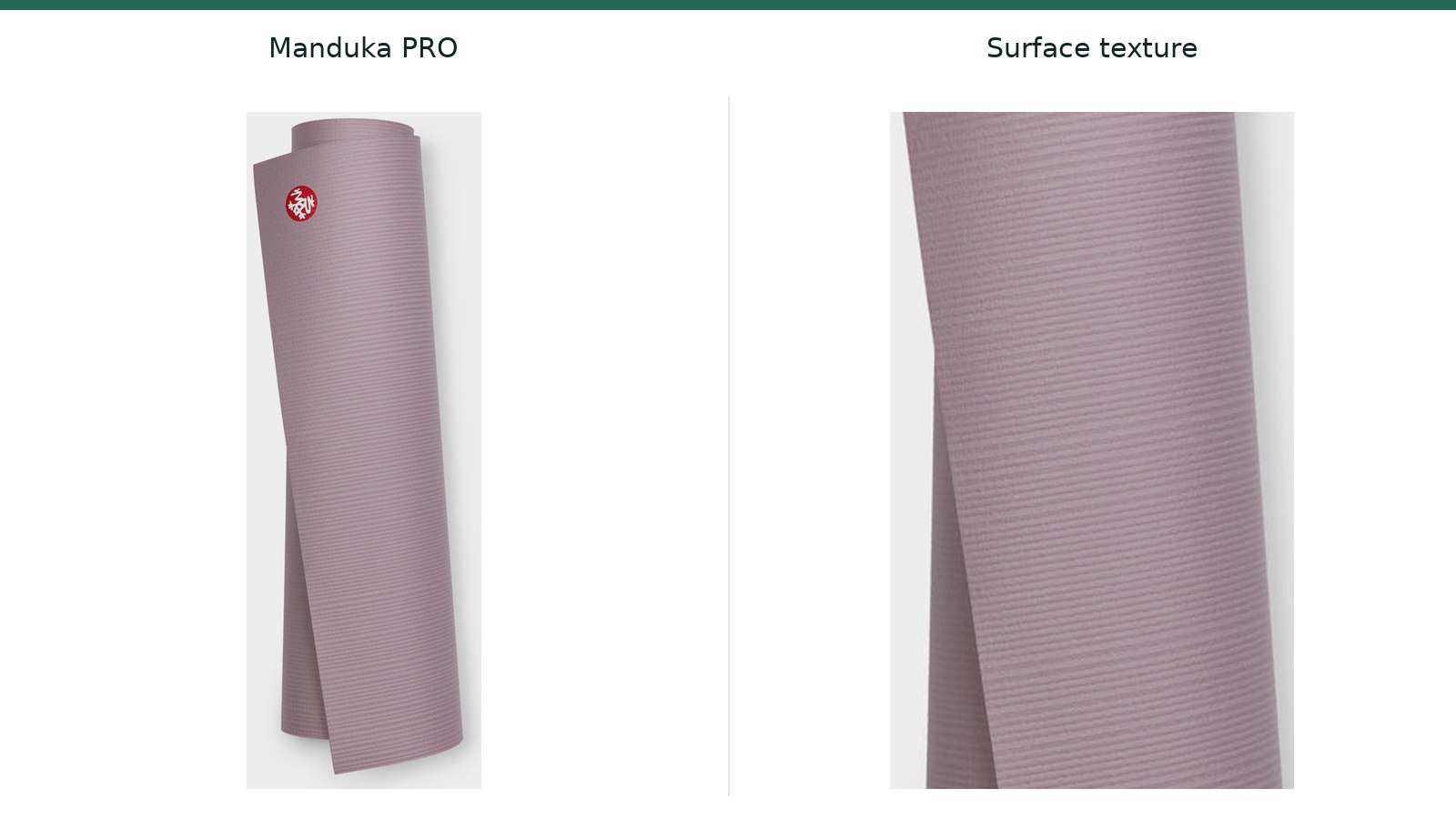
A new PRO can feel slick. Manduka’s updated grip guidance says this comes from the surface itself rather than a removable manufacturing film. The company has retired its salt-scrub advice. Use the mat regularly, wipe away sweat and oils, and use a suitable towel when needed; there is no guaranteed break-in deadline.
Sweat sits on the surface. In a heated room or a genuinely sweaty flow, drips pool instead of absorbing, and hands slide. The workaround is a mat towel laid on top, which Manduka itself recommends for heated classes. For an occasional hot class it's fine; if hot yoga is your main practice, buy an absorbent-top mat instead, and the alternatives below cover that.
The lifetime guarantee has fine print. Manduka defines "lifetime" as roughly ten years of proper use, allows one replacement per purchase, requires proof of purchase, and its help pages describe coverage for mats bought from Manduka or authorised sellers in the United States. Whether an Amazon purchase shipped here qualifies isn't explicitly confirmed, so treat the guarantee as a signal of how long the mat is built to last rather than a promise you can bank on locally. The durability evidence stands on its own either way.
The two alternatives worth naming
Cheaper: a S$30 to S$50 TPE mat is the right call if you practise occasionally or aren't sure yoga will stick. It weighs a kilo, grips reasonably from day one, and when it wears out in a year or two you've lost little. Our budget yoga mat guide picks through those. The maths only favours the PRO once practice is a habit.
For hot yoga: the Lululemon The Mat is close to the PRO's mirror image. Its polyurethane top layer absorbs sweat and grips when drenched, it needs no break-in, and at 2.38kg it's a kilo lighter. In exchange you give up the PRO's wipe-clean surface and its decade-plus lifespan evidence, and its rubber base is a real concern if you have a latex allergy. Our Lululemon mat review covers it properly.
Or practise on someone else's mat first
If you're not yet sure the habit will hold, S$168 buys about four to six weeks of classes instead, where the studio provides the mat and a teacher fixes your alignment. Absolute You at Millenia Walk (4.7 stars, 408 Google reviews), Avante Gym & Yoga (4.8, 250 reviews) and Yoga Movement Orchard (4.4, 263 reviews) are all strong starting points, and our yoga studio guide maps the rest. Once you're practising at home twice a week, come back to the PRO; that's the point where the ten-year mat starts earning its price.
Common questions
Is the Manduka PRO worth the price?
How long does the Manduka PRO take to break in?
Is the Manduka PRO good for hot yoga?
Does the lifetime guarantee apply in Singapore?
How do you clean a Manduka PRO?
Updated July 2026: first published. Price and the listing's pooled 4.6-star rating checked against the Amazon page; guarantee terms from Manduka's published policy.