Lifting Straps vs Wrist Wraps Singapore (2026)
Gymreapers sells 18-inch straps and 18-inch wraps, but only the straps connect your grip to the bar. Choose straps for grip assistance, wraps for wrist support, or neither when your training doesn't need them.
As an Amazon Associate, Gyms.sg earns from qualifying purchases. Links here, including to our partner brand OnWhey, may earn us a commission at no extra cost to you.
Choose lifting straps when your hands lose their hold during rows or deadlifts; choose wrist wraps when you want adjustable support around the wrist during pressing. Gymreapers makes an 18-inch version of each, but the shared measurement doesn't make them interchangeable. If neither issue affects your training, keep your money.
The useful outcome is specific: you finish a pulling set without stopping only because the handle is slipping, or you set the wrap tension you prefer before a press. An accessory should have a job you can describe before you buy it.
Gymreapers' explanation of straps and wraps distinguishes grip assistance from wrist support. Neither is a promise of extra strength or protection from injury. The choice starts with which part of your current set is getting in the way.
Is your grip ending the set?
Lifting straps are the relevant option when holding the handle is the problem. A conventional lasso strap goes around your wrist, with its loose end wrapped around the bar or handle. A wrist wrap stays around your wrist and doesn't make that connection.
Be specific about what happens. If a row stops because your fingers are opening while you could otherwise continue the movement with control, a strap addresses that situation. If you can't move the weight without changing your position, attaching your hand more securely doesn't resolve the problem. Reduce the load or get help with the movement before shopping.
Keep a note after your next pulling session: the exercise, the load, the point where the set stopped, and what stopped it. This takes less effort than comparing ten nearly identical listings and gives you something useful to judge a purchase against. You don't need a special app. A sentence beside the exercise in your training log is enough.
For a standard lasso option, Gymreapers lists its padded lifting straps as cotton with neoprene padding, 18 inches long, supplied as a pair. The padding is at the wrist contact area; the long tail provides the material that wraps around the handle. Those are construction details, not a rated maximum lifting capacity.
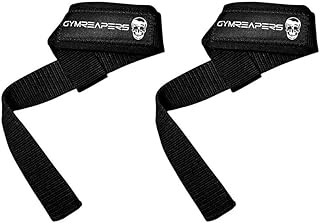
Check Gymreapers Lifting Wrist Straps price on Amazon. Confirm that the selected listing is the padded pair, and compare the delivered total rather than assuming an overseas manufacturer's price applies to your order.
Do you want support during pressing?
Wrist wraps are the relevant category if you want a wrap around the wrist during a press. Their closure and stretch let you adjust the tension. They don't attach you to the bar, and they aren't a substitute for working out why a movement hurts.
The Gymreapers 18-inch wrist-wrap specification gives a width of 3 inches, a thumb loop, and a hook-and-loop closure. The 18-inch measurement describes the length of the material before wrapping, not the wrist circumference the product fits.
That difference matters on a product page. A seller may call both products “wrist support,” while the photographs show completely different objects. A wrap has a broad strip and a fastening patch; the lasso strap has a tail intended to go around a handle. Look at the shape before comparing the discount.
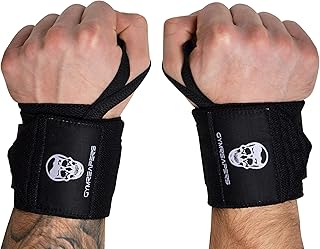
Check Gymreapers IPF Wrist Wraps price on Amazon. Match the pictured closure and stated length to the version you intended to buy. A similar name on a stiff-wrap or tie-wrap listing can describe a different construction.
If you're still learning the press, the bench-press guide is a more useful next read than another accessory roundup. A coach can watch the position of your hands and the bar. Buying a wrap doesn't provide that feedback.
Should you buy a longer or stiffer wrap?
Start with the amount of wrapping material and adjustability you need, rather than treating the longest version as an automatic upgrade. More material means more to wind around the wrist and manage between sets. Whether you prefer that depends on how you use the wrap.
Gymreapers' wrap comparison separates the classic 18-inch cotton-and-elastic wrap from its stiff 12-to-24-inch range and its 36-inch tie-style strength wraps. These are different designs, so compare construction as well as the number in the title.
If you already own wraps, write down the complaint before replacing them. A fastening patch that no longer holds is different from disliking the stiffness. Buying more length won't repair a worn closure; changing material may matter more when the current wrap feels too restrictive for the way you train.
I would choose the accessory category before the colour. Gymreapers sells both straps and wraps in similar colourways, which makes the wrong pair look surprisingly convincing in a shopping basket.
Someone training for a competition should also check that event's current equipment requirements before purchasing. A product title containing “IPF” doesn't tell you everything about the exact model, event, or how it must be worn. Ask the organiser if the listing leaves any ambiguity.
What should you check before ordering?
Confirm the product identity, pack contents, and final delivered cost. The smallest accessories can still be poor purchases if a listing sends one item when you expected a pair, or adds shipping that changes the comparison.
Read the variation selector after choosing the colour. Look for padded versus unpadded straps, standard versus stiff wraps, and the stated length. Product reviews may sit under a family of variations, so a comment about one design doesn't necessarily describe the version in your basket.
Next, check who sells the item, the delivery estimate, and the return conditions shown for that order. Keep the order confirmation. If a manufacturer's warranty matters to your decision, ask whether that particular seller and purchase channel qualify before treating it as part of the value.
You also need time to learn the setup. Use the manufacturer's instructions and practise handling the accessory with an unloaded bar or a suitably light handle before adding it to a working set. If you're unsure how to release a strap, get someone qualified to demonstrate it. Don't improvise a strap setup for an exercise just because a listing says “all workouts.”
The lifting-straps buying guide helps once you've decided that grip assistance is the right purchase. If you're building your training routine first, start with the broader strength-training guide and make the accessory a later decision.
When is buying neither the better choice?
Buy neither when the accessory has no clear job in your current sessions. You can complete a useful workout without collecting every piece of equipment used by the person next to you.
If your current loads stay secure in your hands and your pressing setup feels controlled, record your training and revisit the question only when a repeatable limitation appears. “I saw someone use these” isn't the same purchase reason as “my grip consistently ends my rows.”
If you need a place to learn with equipment already available, browse the commercial gym directory and ask about introductory coaching before signing up. For coached mixed sessions, the CrossFit directory gives you another place to compare instruction and class format. Ask each facility what it actually teaches and provides.
Already paying for a membership? Ask your existing gym for setup help first. The gym directory is useful for comparing alternatives, but changing gyms or buying accessories shouldn't be the default answer to a question that a short demonstration could settle.
Frequently asked questions
Are lifting straps and wrist wraps the same thing?
No. Lifting straps connect your wrist and grip to a bar or handle through a length of material. Wrist wraps fasten around the wrist and stay separate from the bar.
Can I use wrist wraps instead of straps for rows?
Wrist wraps don't provide the same connection to the handle. If holding the handle is what stops the row, evaluate a lifting strap rather than buying a wrap because its listing also mentions lifting.
Does 18 inches mean the wrap fits an 18-inch wrist?
No. It is the stated length of the wrap material before it winds around your wrist. Check the manufacturer's sizing and application instructions for the exact product.
Should a beginner buy both?
There is no need to buy both automatically. Learn the movement and identify a specific reason for either accessory; a bundle only saves money if you will use both items.
Will wrist wraps fix wrist pain?
That isn't a sound reason to self-select a wrap. Stop a painful movement and seek advice from a qualified health professional rather than using a tighter wrap to continue through pain.
Updated 22 September 2026: added the strap-versus-wrap decision, manufacturer dimensions, and checks for listing variations.