
How to Choose a Rowing Machine for a Singapore Flat (2026)
Check floor space, storage, resistance and noise before choosing a rowing machine for your Singapore flat.
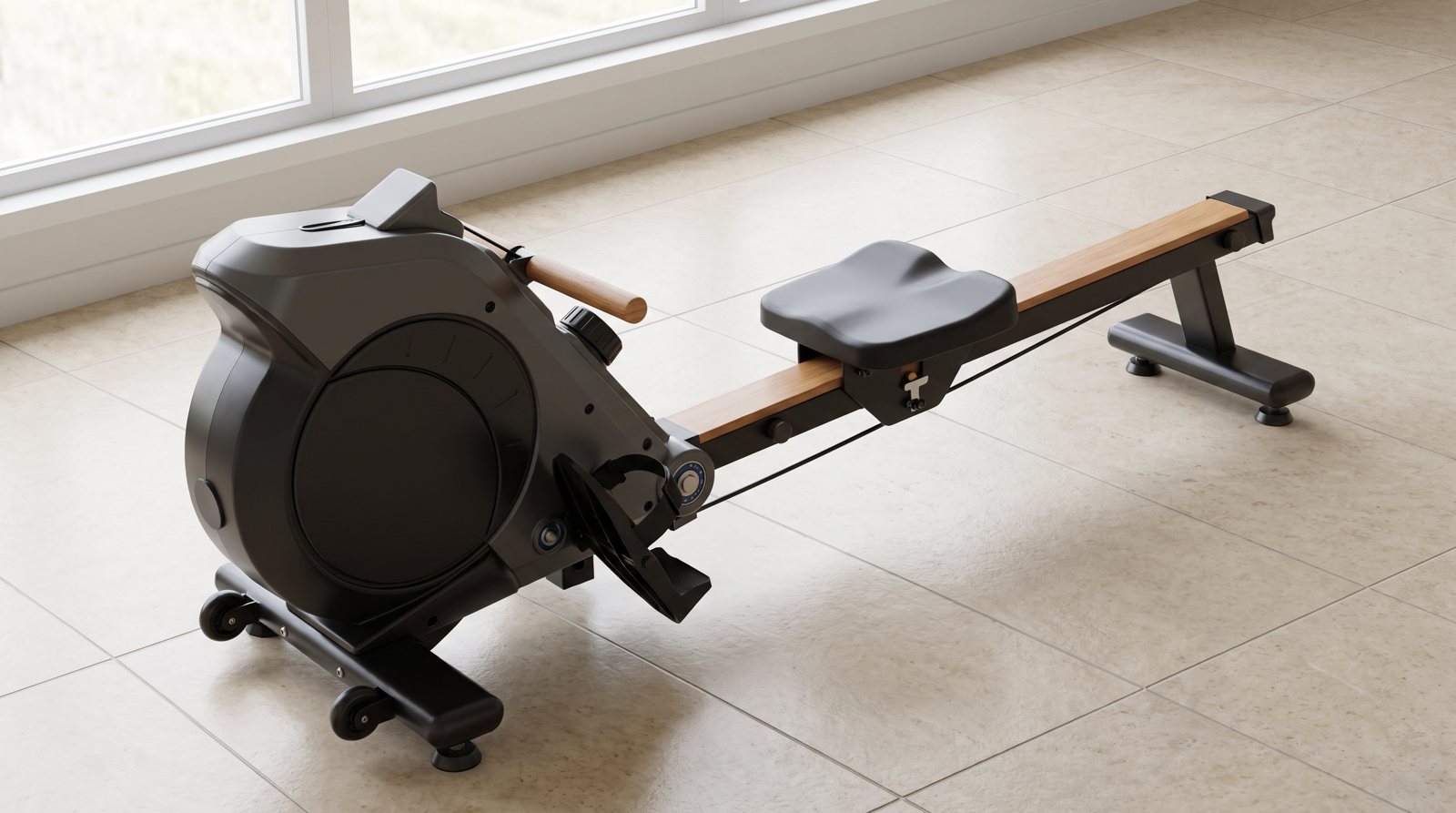
Choose a home rower only after checking its operating space; Concept2 recommends 274 × 122 cm for the RowErg. For a Singapore flat, also plan where to store it and hear the exact machine before buying.
When we last checked (1 October 2026), the Concept2 RowErg and the WaterRower were both unavailable from Amazon in Singapore, so this guide does not name a pick. Their published specifications are still useful when you measure your room.
HOW MUCH SPACE WILL YOU NEED?
The Concept2 specifications list a frame measuring 244 × 61 cm and an operating area of 274 × 122 cm with clearance. The standard-leg model separates into two pieces without tools, with stored dimensions of 63.5 × 83.8 × 137.2 cm.
For comparison, AIBI's WaterRower S4 listing gives assembled dimensions of 210 × 56 × 53 cm and permits upright storage with water in the tank. These are the listed machine dimensions; ask for the operating clearance and upright measurements of the exact version you are considering.
Mark the required operating area on the floor with removable tape, leaving your furniture in place. Check the door swing, the route through the room and the space needed to put the rower away. If it would block your only walkway, postpone buying until you have a workable layout; the HDB home gym guide covers broader room planning.
SHOULD YOU CHOOSE AIR, WATER OR MAGNETIC RESISTANCE?
Air resistance: the RowErg uses a spinning fan, and resistance increases as you pull harder. Consider this type if you want to vary effort through your stroke, and include a listening check before choosing it for a shared room.
Water resistance: the WaterRower uses water drag, with resistance responding to your effort. Its owner's manual includes tank-care instructions, so read those before deciding whether this type suits your routine.
Magnetic resistance: magnets act on a flywheel to provide resistance, as described in this manufacturer explanation. If adjustable resistance settings appeal to you, try the exact machine and check its range, power requirements and any subscription-dependent functions before ordering.
For more detail on the first two types, read the water versus air rowing machine guide. Use a demonstration to check the seat, foot position and full stroke as well as the resistance.
HOW SHOULD YOU CHECK NOISE AND NEIGHBOUR IMPACT?
Concept2 describes fan noise that varies with effort. Ask to hear the rower at the intensity you expect to use, and have someone listen away from the seat. For an HDB flat or condo, consider your intended training time and anyone working or sleeping nearby.
Check your building's noise guidance and the manufacturer's floor-protection advice. This guide has no measurements of sound or vibration reaching a neighbouring flat, so treat that as an unresolved part of the purchase. Ask about a home trial and return terms if noise is your main concern.
HOW DO YOU START BEFORE COMMITTING TO A PURCHASE?
Arrange a demonstration or ask a gym you already use whether it has a rower you can try. Read the beginner rowing guide and practise the movement before adding hard intervals. On a Concept2, the manufacturer recommends starting with the damper between 3 and 5; that lever controls airflow and changes the feel of the stroke.
Before ordering, ask who handles repairs in Singapore and get delivery, assembly, warranty and return terms in writing. If you are still deciding how rowing fits into your room and routine, the home gym equipment guide can help you plan the rest of the space.